


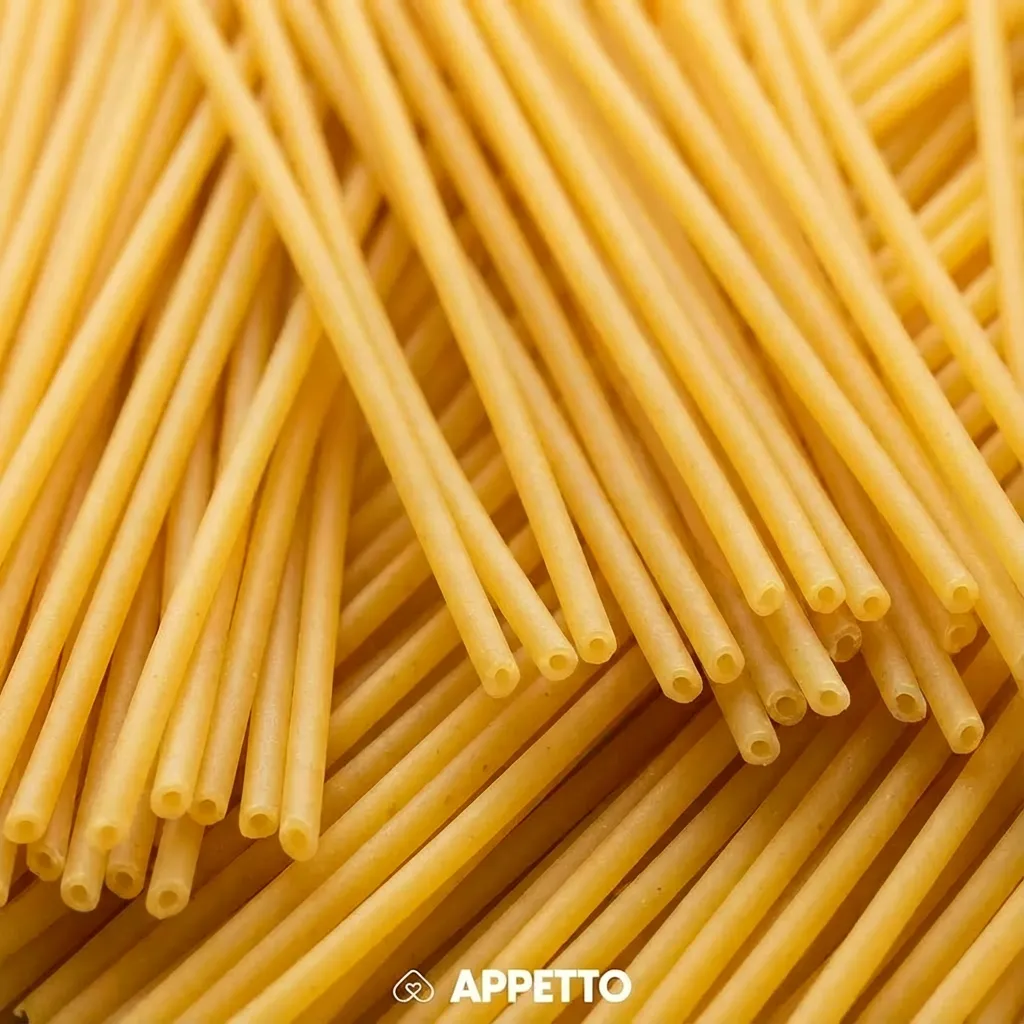
Dogs can eat bucatini, but it is only allowed in moderation. This pasta should be treated as an occasional treat and must never replace a complete and balanced meal.
Nutritional Value and Benefits
Bucatini pasta offers a low nutritional value for dogs. Its primary benefit is providing an energy supply through cooked starch. Therefore, it is best kept as a sporadic snack rather than a dietary staple.
Raw or Cooked?
Bucatini must always be offered cooked and plain, in a small quantity. The cooking process is crucial because it alters the starch structure. Thanks to the action of amylase enzymes, cooked starch becomes much more digestible for dogs compared to raw starch.
Potential Risks
While a small amount of bucatini is safe, excessive consumption presents several risks:
- Nutritional risk: An excess of starch can lead to a caloric overload, which may result in weight gain.
- Digestive risk: Eating too much pasta can cause digestive issues, specifically diarrhea.
Vulnerable Dogs
It is important to note that primitive dog breeds have a lower tolerance for starch. Extra caution is advised before offering this type of food to these specific breeds.
Symptoms to Watch and What to Do
If a dog consumes too much bucatini, digestive upset can occur. The symptoms to monitor include:
- Vomiting
- Diarrhea
- Flatulence
If these symptoms appear after your dog has eaten bucatini, keep a close eye on their condition. Contact a veterinarian if the symptoms persist, worsen, or seem concerning.
Discover More with APPETTO
To help you better understand what to feed your pet, the APPETTO application allows you to consult various information on dog and cat food. You can learn more by downloading it here: APPETTO.
This article is provided for informational purposes only. It does not replace the advice or diagnosis of a veterinarian. A veterinary professional should be consulted if concerning or persistent symptoms arise.