


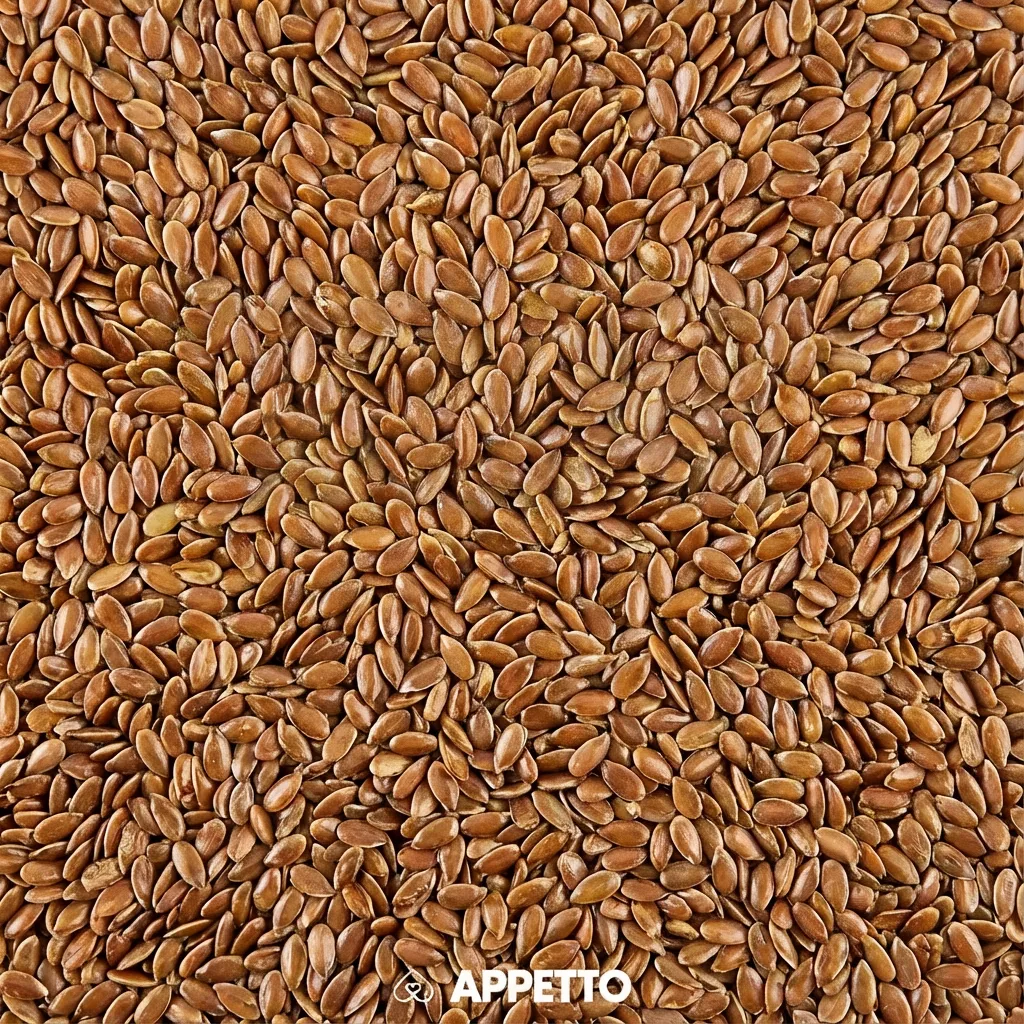
Can cats eat flaxseeds? They are allowed in moderation, but caution and very small quantities are advised.
Nutritional Value and Limited Benefits
The overall nutritional value of flaxseeds for cats is low. While they contain mucilages that offer a soothing effect and can facilitate transit when given in micro-doses, their omega-3 benefits are very limited for felines. Scientifically, cats have a higher need for direct DHA rather than plant-based precursors like ALA, as their ability to convert ALA to DHA is very poor. Consequently, vegetable oils and plant-based fats are not ideal for them.
Preparation
If offered, flaxseeds should be raw and very finely ground, and only given in micro-doses.
Risks
Feeding too much flaxseed presents nutritional risks. The fatty profile is poorly converted by cats, and the high fiber content can lead to digestive issues, specifically diarrhea, if given in excess.
Vulnerable Cats
Older cats, who often have variable digestive transit, are particularly vulnerable to these issues.
Symptoms to Watch For
If a cat consumes an excessive amount of flaxseeds, they may experience:
- Vomiting
- Diarrhea
If you notice these symptoms, monitor your cat closely. If the symptoms persist, worsen, or seem concerning, contact a veterinarian.
Learn More with APPETTO
To better understand your cat’s or dog’s diet and to check information on various foods, you can use APPETTO.
This article is for informational purposes only and does not replace the advice or diagnosis of a veterinarian. A veterinarian should be consulted in case of concerning or persistent symptoms.