


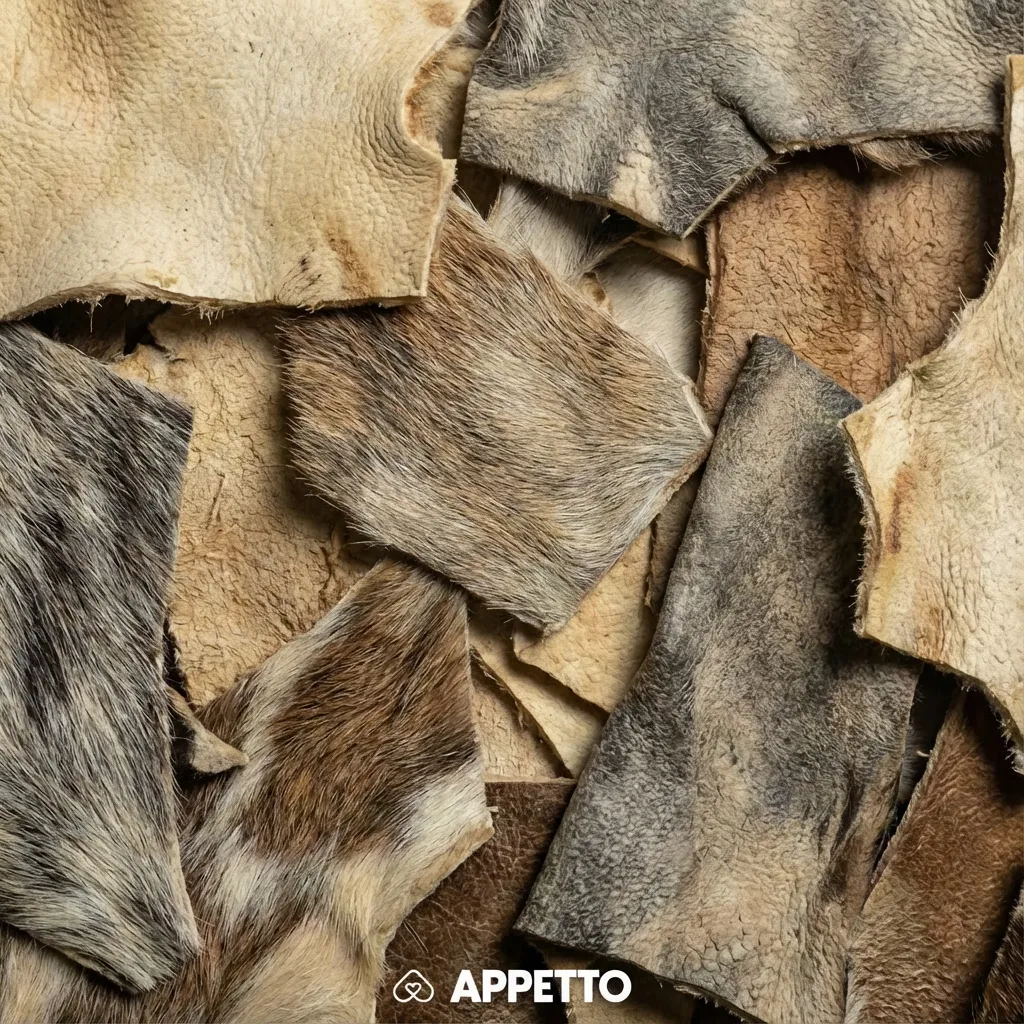
Goat skin should be avoided for cats. Thick strips or dried pieces can cause choking, intestinal blockage, digestive irritation, vomiting, or constipation.
Quick verdict
- For cats: avoid.
- Key takeaway: no hard strips, no rawhide, no dog chews.
Goat skin and cats: an unsuitable product
Cats do not need this type of chew. The texture can be too hard, poorly digestible, and risky if the cat swallows a piece.
Possible benefits?
No significant benefits.
- No real nutritional value.
- Mechanical risk outweighs the benefit.
Risks to know
- Shreds: digestive blockage.
- Bacteria: possible diarrhea.
- Treatments: possible irritation.
How much to give?
No intentional amount is recommended.
Dried or treated?
Both forms remain largely unsuitable for cats.
How to prevent accidents?
- Do not give chewable skin to your cat.
- Keep dog treats out of reach.
- Choose an appropriate feline treat.
At-risk cats
- Greedy eaters.
- Brachycephalic cats.
- Senior cats.
- Cats with sensitive digestion.
My cat swallowed some: what should I do?
Monitor for vomiting, diarrhea, constipation, or pain. Contact a vet if a large piece was swallowed.
How APPETTO can help
APPETTO helps you spot unsuitable treats, compare cat products using the Pet-Score®, and make safer choices. Download APPETTO.
FAQ
Is goat skin toxic to cats?
It is mainly a mechanical risk.
Can my cat chew a strip?
No, it is best avoided.
What signs should I watch for?
Vomiting, diarrhea, or constipation.
Can a greedy cat eat it?
No, there is a risk of blockage.
Is dried skin digestible?
Not enough to be recommended.
What alternative should I choose?
A suitable feline treat.
Goat skin should be avoided for cats. To compare better options, APPETTO helps you with the Pet-Score®. Download APPETTO.
Credits and disclaimer
Credits: Content created by the APPETTO team based on referenced sources and our internal food scoring methodology.
Disclaimer: This information is general and does not replace veterinary advice.