


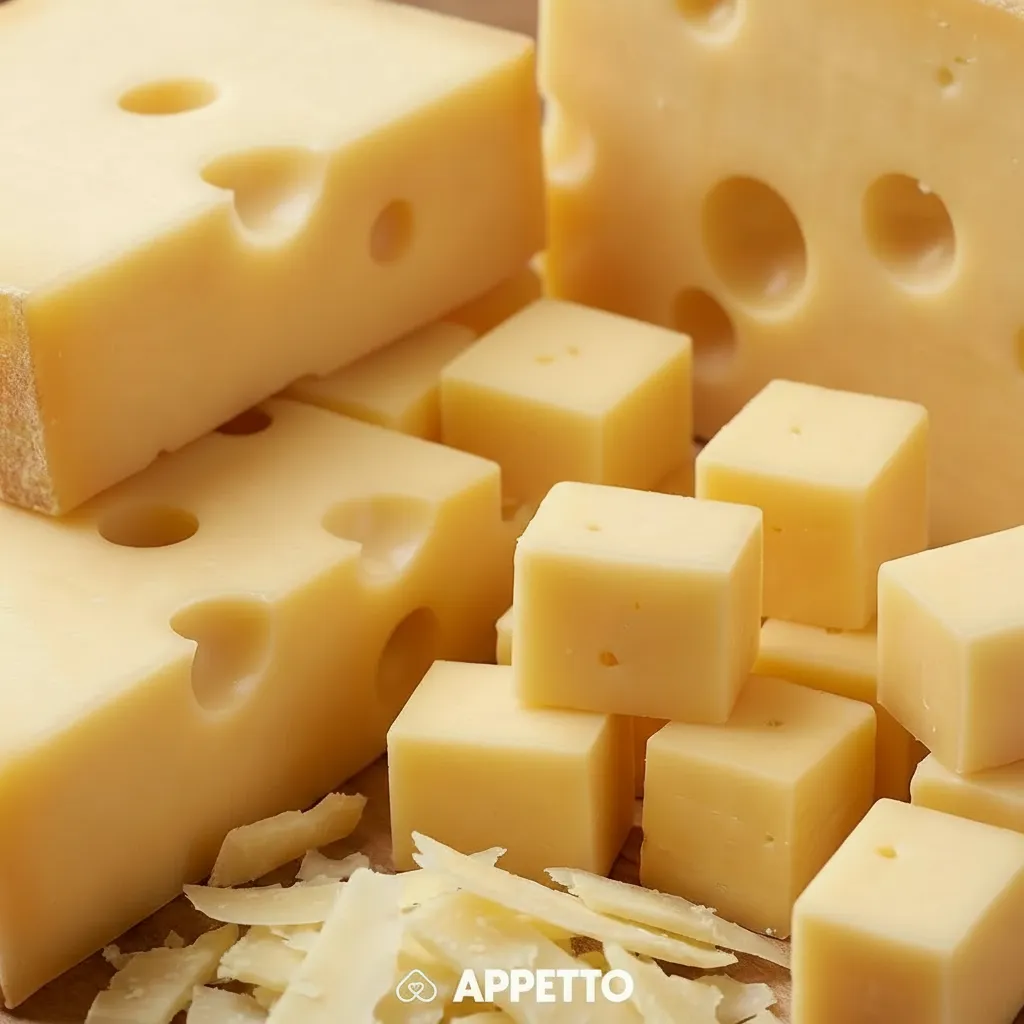
Gruyère can be given to dogs in moderation, in mini-portions. As a hard cheese, it generally contains little lactose, making it often better tolerated than fresh cheese. However, it remains salty, fatty, and high in calories. So, yes to an occasional mini-cube, but no to treating your dog like an official guest at the cheese board.
Quick verdict
- For dogs: allowed in moderation.
- Key takeaway: small amounts, rind removed, rarely, especially for overweight dogs.
Gruyère for dogs: allowed, limited, or forbidden?
Gruyère is not forbidden for dogs, but it must remain a very occasional treat. Aging reduces its lactose content, but salt and fats are still present. The goal is not to integrate it into their diet, but merely to allow a micro-reward if the dog tolerates it well.
Is Gruyère dangerous or toxic for dogs?
Gruyère is not toxic in small quantities. However, it can cause diarrhea, gas, unusual thirst, or weight gain if portions are too large or too frequent. Lactose-intolerant dogs may also react even to small doses.
What are the possible benefits?
Gruyère can have very limited benefits.
- Provides a little protein and calcium.
- Highly palatable, it can occasionally help as a reward or to hide a pill.
What are the risks to know?
The main risk comes from excess.
- Salt: thirst, unnecessary strain, and weight gain with repeated use.
- Residual lactose: diarrhea or gas in sensitive dogs.
- Parts to avoid: rind, very salty pieces, melted dishes, or cheese preparations.
How much should you give your dog?
Gruyère must remain an occasional mini-treat.
- Small dog: a mini-shaving or a very small cube.
- Medium dog: one small cube, rarely.
- Large dog: one to two small cubes maximum, occasionally.
Can my dog eat raw, melted, or grated Gruyère?
Plain Gruyère is the least problematic form. Melted or grated in a gratin, quiche, sauce, or pizza, it often becomes too greasy, too salty, and is paired with unsuitable ingredients like garlic, onion, cream, or cured meats.
How to prepare it properly?
- Choose a small plain piece.
- Remove the rind.
- Give a mini-portion and monitor their stool.
When should it be avoided?
- Puppies.
- Senior dogs.
- Dogs that are overweight, lactose-sensitive, prone to diarrhea, or have pancreatitis.
- Dogs on medication, with kidney or heart disease, or on a veterinary diet.
My dog ate Gruyère: what should I do?
For a small piece, just monitor them. If your dog ate a large amount, the rind, or a rich dish with Gruyère, contact your vet if symptoms appear or if your dog is fragile.
What signs should alert you?
Diarrhea, gas, vomiting, excessive thirst, abdominal pain, lethargy, or loss of appetite should be warning signs.
What are safer alternatives?
- A low-salt dog treat.
- A small piece of plain cooked chicken.
- A suitable vegetable like a small amount of carrot or zucchini.
How can APPETTO help you?
APPETTO helps you understand which foods are allowed with caution and lets you compare dog products using the Pet-Score®. A simple guide to making more informed choices. Download APPETTO.
FAQ
Is Gruyère toxic to my dog?
No, not in small quantities, but it can be too salty, too fatty, or poorly tolerated.
How much Gruyère can I give my dog?
A mini-cube is enough, and only occasionally.
Can my dog eat the Gruyère rind?
It’s best to avoid the rind, especially if it’s hard or salty.
Can my dog eat grated Gruyère?
Yes, an occasional tiny pinch, if the cheese is plain and well-tolerated.
What signs to watch for if my dog ate too much Gruyère?
Watch for diarrhea, gas, vomiting, excessive thirst, and abdominal pain.
Can a puppy eat Gruyère?
It’s best avoided, as puppies are more sensitive to fatty and salty foods.
Gruyère can therefore be tolerated by some dogs in mini-amounts, but it should be limited. To better compare suitable foods and products, APPETTO helps you with the Pet-Score®. Download APPETTO.
Credits and warning
Credits: Content developed by the APPETTO team based on referenced sources and our internal food classification methodology.
Warning: This information is general and does not replace veterinary advice.