


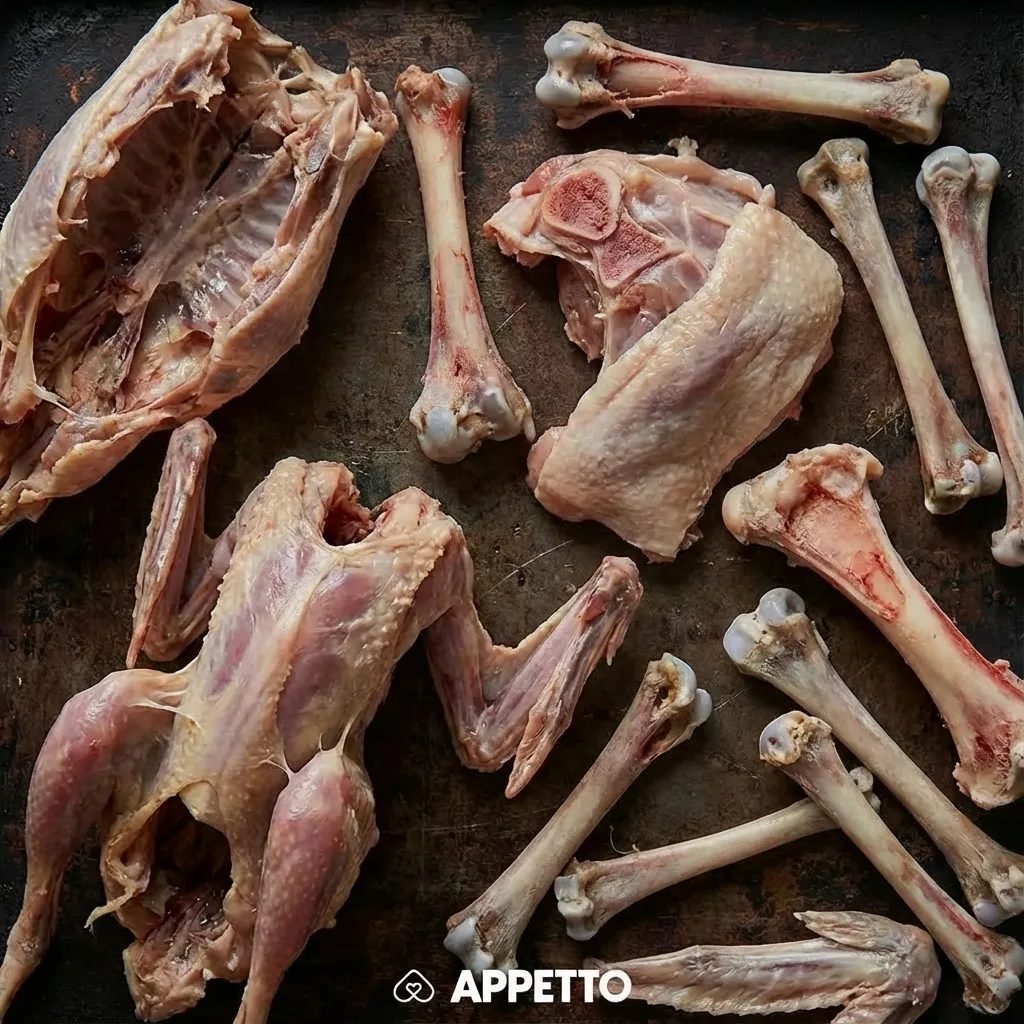
Guinea fowl bones should be avoided for cats. They can cause choking, intestinal blockages, perforations, broken teeth, vomiting, or constipation, especially if they are cooked.
Quick verdict
- For cats: avoid.
- Key takeaway: no guinea fowl bones in the food bowl.
Guinea fowl bones and cats: too thin to be safe
Poultry bones can lose their elasticity and splinter into sharp points. For a cat, even a small fragment is enough to cause a medical emergency.
What are the possible benefits?
No useful benefit outweighs the risk.
- No nutritional necessity.
- Safer alternatives are available.
Risks to know
- Thin bones: brittle and likely to cause injury.
- Cooked bones: splinter easily into sharp pieces.
- Kittens: narrow digestive tracts.
How much can I give?
None.
Raw or cooked?
Cooked bones are particularly dangerous, and even raw bones should be avoided for cats.
How to prevent ingestion?
- Remove all bones.
- Do not give the carcass.
- Keep leftovers out of reach.
At-risk cats
- Kittens.
- Senior cats.
- Greedy eaters.
- Cats with fragile teeth.
My cat swallowed a bone: what should I do?
Monitor for choking, vomiting, or constipation. Contact a vet if any symptoms appear.
How can APPETTO help?
APPETTO helps you avoid dangerous foods, compare cat products using the Pet-Score®, and make safer choices. Download APPETTO.
FAQ
Can my cat eat a guinea fowl bone?
No, it should be avoided.
Is a cooked bone dangerous?
Yes, it can splinter into sharp pieces.
What signs should I watch for?
Choking, vomiting, or constipation.
Can a kitten eat them?
No.
Is guinea fowl meat allowed?
Yes, deboned.
What dental alternative should I choose?
A dental treat specifically designed for cats.
Guinea fowl bones should be avoided for cats. To compare suitable alternatives, APPETTO helps you with the Pet-Score®. Download APPETTO.
Credits and disclaimer
Credits: Content created by the APPETTO team based on referenced sources and internal food classification methodology.
Disclaimer: This information is general and does not replace veterinary advice.