


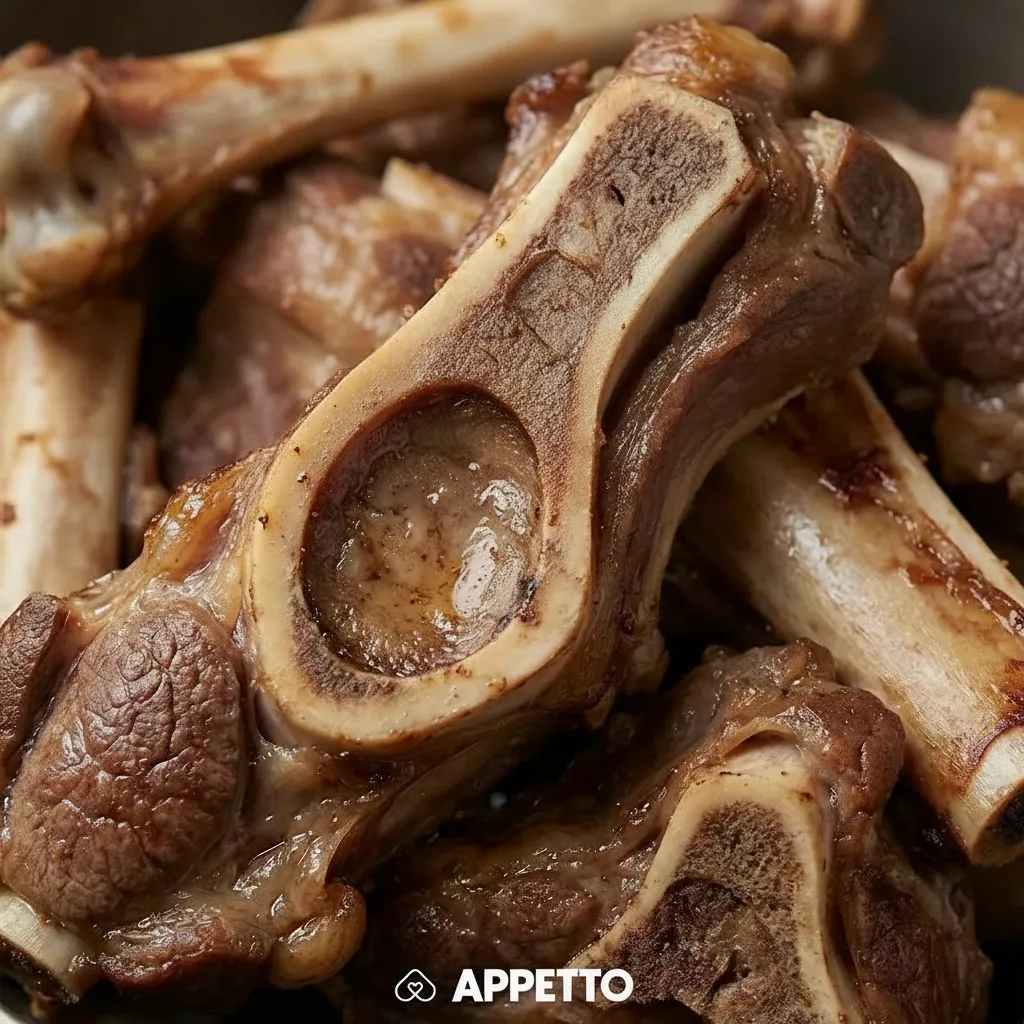
When asking can dogs have bones, lamb bones can be given to your dog in strict moderation, but only if they are raw, meaty, appropriate for their size, and offered under supervision. If you wonder can dogs eat cooked bones, the answer is no; they must be avoided as they can splinter easily.
Quick verdict
- For dogs: allowed with strict moderation.
- To remember: never give cooked bones, and never small, thin ones like lamb chops.
Lamb bones and dogs: chewing benefit or mechanical danger?
An appropriate bone can provide entertainment and help with dental hygiene through chewing. However, the mechanical risks remain real: choking, constipation, digestive tract injuries, or bowel obstruction.
Are lamb bones dangerous for dogs?
Yes, if they are cooked, too thin, too small, or given unsupervised. Lamb ribs, for instance, can splinter and injure the digestive tract.
What are the potential benefits?
- Chewing outlet.
- Mental enrichment.
- Entertainment.
- Mechanical cleaning effect on teeth if the bone is suitable.
Risks to be aware of
- Cooked bones: sharp splinters.
- Bones that are too small: swallowed whole.
- Thin ribs: risk of splintering.
How many lamb bones can you give your dog?
Bones should never be a frequent or trivialized treat. They must remain an occasional offering, tailored to the dog’s size, and removed as soon as they become too small or dangerous.
- Small dogs: extreme caution, often best avoided.
- Medium dogs: appropriate raw bone, strictly supervised.
- Large dogs: large meaty raw bone, never cooked.
Raw or cooked bones: which to choose?
If you give a bone, it must be raw and appropriately sized. Cooking weakens the bone matrix and makes it much more likely to splinter.
How to minimize the risks?
- Choose a raw, large, and meaty bone.
- Supervise the entire chewing process.
- Take the bone away if it breaks, gets too small, or if the dog tries to swallow it too quickly.
When should you avoid bones?
- Brachycephalic dogs.
- Greedy eaters or gulpers.
- Puppies.
- Senior dogs with fragile teeth.
- Dogs prone to constipation or with sensitive digestion.
My dog swallowed a lamb bone: what should I do?
Monitor your pet closely. If you notice choking, vomiting, abdominal pain, constipation, blood in the stool, or lethargy, contact a veterinarian immediately.
What signs should alert you?
Choking, coughing, excessive drooling, vomiting, constipation, abdominal pain, bloody stools, or refusing to eat.
What are safer alternatives?
- Appropriate chew toys.
- Approved dental treats.
- Food-dispensing toys without bones.
How can APPETTO help you?
APPETTO helps you better understand mechanical risks, compare dog products using the Pet-Score®, and choose safer options. Download APPETTO.
FAQ
Can dogs eat cooked bones like cooked lamb bones?
No, cooked bones must always be avoided.
Are lamb chops safe for dogs?
No, they are too thin and can easily splinter.
Can dogs eat bones that are raw?
Only if they are an appropriate size, meaty, and given under close supervision.
What signs should I watch for after ingestion?
Choking, vomiting, constipation, or blood in the feces.
Can a brachycephalic dog eat bones?
It is better to avoid them, as the risk of choking is significantly higher.
What should I do if my dog swallows a bone fragment?
Contact a vet if any symptoms appear or if the fragment is large.
Lamb bones are not harmless treats: they should only be raw, large, appropriate for the dog, and supervised. To compare safer options, APPETTO guides you with the Pet-Score®. Download APPETTO.
Credits and disclaimer
Credits: Content created by the APPETTO team based on referenced sources and our internal food classification methodology.
Disclaimer: This information is general and does not replace professional veterinary advice.