


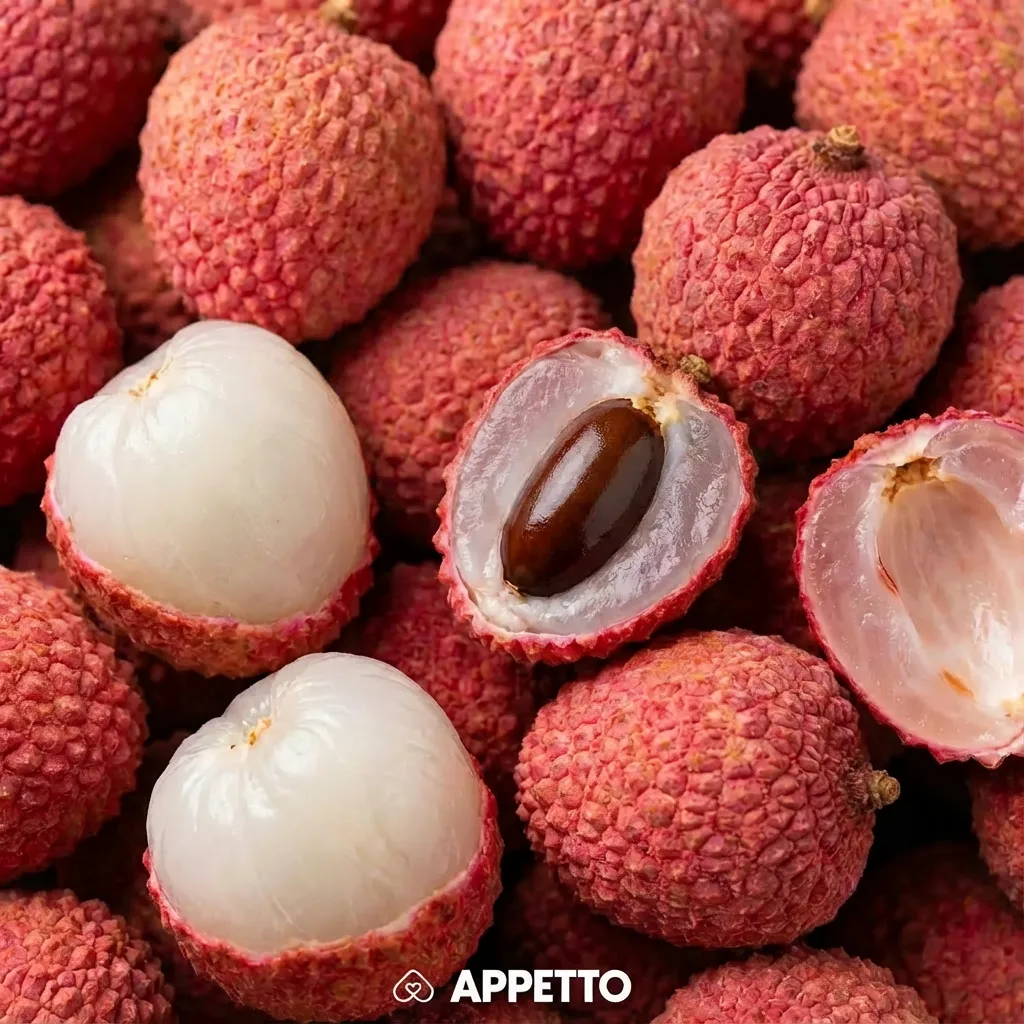
Lychee is not a recommended dog treat. A tiny amount of fully ripe pulp may be less concerning, but the hard pit can cause choking or intestinal obstruction, while unripe lychees contain compounds associated with severe hypoglycaemia in humans.
Quick verdict
- For dogs: best avoided.
- Main concerns: pit, shell, sugar and unripe fruit.
- After a tiny taste: monitor if only ripe pulp was involved.
Why lychee is risky for dogs
The fruit combines a slippery, sugary pulp with a large hard pit. This makes whole lychees particularly unsuitable for dogs that swallow food quickly.
Are unripe lychees toxic?
Unripe lychees may contain MCPG and hypoglycin A, compounds linked to dangerously low blood sugar in people. Canine-specific evidence is limited, but unripe fruit should never be offered.
Possible benefits
The pulp provides a little water, but the benefit is too small to justify the risks.
- Light hydration.
- No essential canine nutritional value.
Possible risks
- Vomiting or diarrhoea.
- Abdominal pain or constipation.
- Choking or obstruction from the pit.
- Weakness, tremors or unusual behaviour after unripe fruit.
- Excess sugar and weight gain.
How much lychee can a dog eat?
No regular serving is recommended. Avoid offering lychee intentionally.
Fresh, canned or processed lychee?
Avoid whole fresh fruit, canned lychees, syrup, juice, desserts and unripe lychees.
What to do after ingestion
- Remove the remaining fruit and pits.
- Check whether the fruit was ripe or unripe.
- Monitor after a tiny taste of ripe pulp.
- Contact a veterinarian if a pit, shell, unripe fruit or several lychees were swallowed.
Warning signs
Watch for vomiting, diarrhoea, abdominal pain, constipation, weakness, tremors, lethargy or unusual behaviour.
Safer alternatives
- A few plain blueberries.
- A small piece of seedless apple.
- A piece of seedless watermelon.
How APPETTO can help
APPETTO helps you identify fruits with avoidable risks, compare dog products and make better choices using the Pet-Score®. Download APPETTO.
FAQ
Is lychee toxic to dogs?
Ripe pulp is not clearly toxic in a tiny amount, but whole and unripe lychees are unsafe.
Can dogs eat lychee pits?
No. The pit may cause choking or intestinal obstruction.
Are unripe lychees dangerous?
Yes. They contain compounds associated with severe hypoglycaemia and should never be offered.
Can diabetic dogs eat lychee?
No. Lychee is very sweet and unsuitable for diabetic dogs.
What if my dog ate ripe lychee pulp?
Monitor after a tiny amount and contact a veterinarian if symptoms develop.
Lychee is best avoided for dogs because its pit, sugar content and unripe fruit create unnecessary risks.
Credits and disclaimer
Credits: Content developed by the APPETTO team using referenced sources and its internal food-classification methodology.
Disclaimer: This information is general and does not replace veterinary advice.