


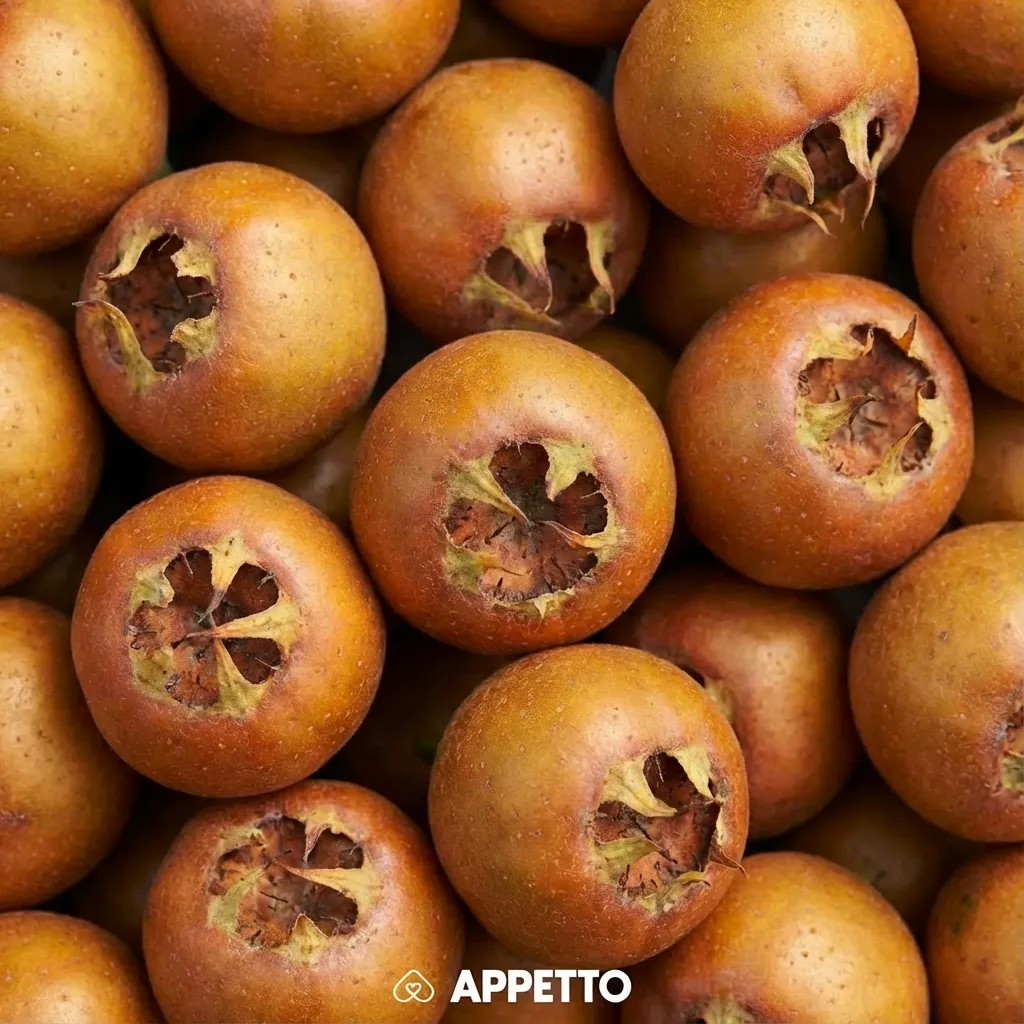
Dogs may tolerate a small amount of properly prepared medlar flesh, but the name can refer to common medlar or loquat. The pits, seeds and leaves must always be removed because they may cause obstruction or release cyanide when chewed.
Quick verdict
- For dogs: flesh may be tolerated in small amounts.
- Main rule: remove every pit, seed and leaf.
- Best approach: identify the fruit correctly before serving it.
Why species identification matters
Common medlar and loquat are different fruits. Common medlar is usually eaten when soft or bletted, while loquat has several large cyanogenic pits.
Potential benefits
- Some water.
- A small amount of fibre.
The benefits are modest and do not justify careless preparation.
Possible risks
- Cyanide exposure from chewed pits or seeds.
- Choking or intestinal obstruction.
- Vomiting or diarrhoea after excessive intake.
- Abdominal pain or constipation.
How much medlar can a dog eat?
- Small dog: avoid or offer one tiny piece of seedless flesh.
- Medium dog: one or two small pieces.
- Large dog: a few small pieces, rarely.
How to prepare medlar safely
- Identify the species.
- Choose ripe fruit appropriate for that species.
- Remove every seed, pit, stem and leaf.
- Offer only a small amount of plain flesh.
Fresh, overripe or processed medlar?
Only correctly prepared flesh should be considered. Avoid whole fruit, jam, sweetened compote, liqueur and products containing intact seeds.
My dog ate medlar pits: what should I do?
Contact a veterinarian, particularly if a pit was chewed or the dog is small. Do not induce vomiting unless instructed.
Warning signs
Watch for vomiting, diarrhoea, abdominal pain, constipation, weakness, salivation, breathing difficulty or lethargy.
Safer alternatives
- Seedless apple.
- Ripe seedless pear.
- A few pieces of melon without rind or seeds.
How APPETTO can help
APPETTO helps you understand when the exact fruit species and edible part matter, while comparing dog foods using the Pet-Score®. Download APPETTO.
FAQ
Is medlar toxic to dogs?
The flesh is less concerning, but pits, seeds and leaves may create toxic or mechanical risks.
How much can a dog eat?
One to a few small pieces of seedless flesh, depending on size.
Can dogs eat medlar pits?
No. They may release cyanide and cause obstruction.
Can dogs eat overripe medlar?
Common medlar is traditionally eaten when softened, but every seed must still be removed.
Can puppies eat medlar?
It is safer to avoid it.
Medlar flesh may be tolerated in small quantities, but accurate identification and complete pit removal are essential.
Credits and disclaimer
Credits: Content developed by the APPETTO team using referenced sources and its internal food-classification methodology.
Disclaimer: This information is general and does not replace veterinary advice.