


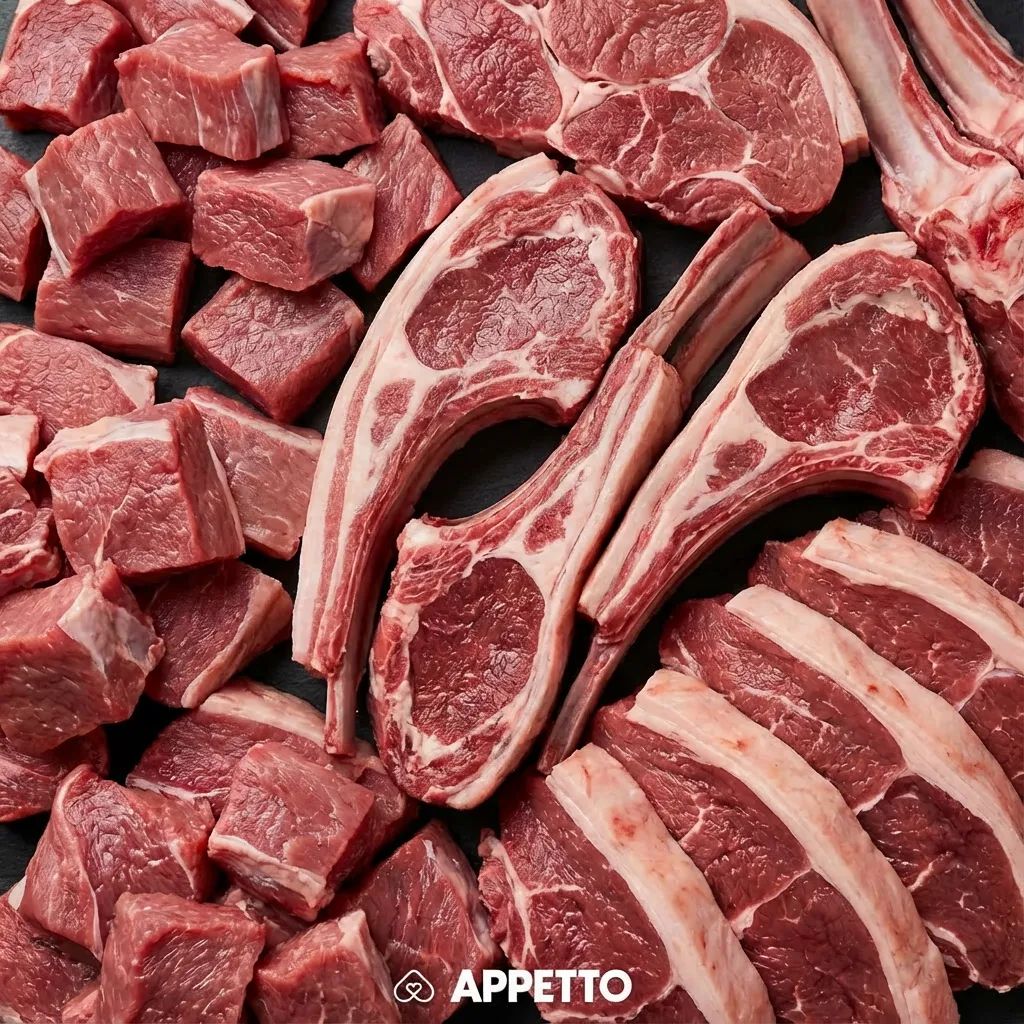
Mutton is safe for cats. It provides complete proteins, iron, and B vitamins, but some cuts are fatty and should be limited.
Quick verdict
- For cats: allowed.
- Key takeaway: lean muscle, without skin or visible fat, ideally cooked.
Mutton and cats: good protein, but not just any cut
Mutton can be suitable for cats, but the chosen cut matters a lot. Meat that is too fatty can lead to vomiting, diarrhea, or weight gain.
What are the potential benefits?
- Complete proteins.
- Heme iron.
- B vitamins.
- Maintenance of lean mass.
Risks to know
- Fat: digestive issues and calories.
- Uncontrolled raw meat: microbial agents.
- Possible allergy: itching or diarrhea.
How much to give?
A small portion is enough. It does not replace a complete diet without a formulated ration.
Raw or cooked?
Cooking is preferable to limit health risks. Raw feeding should not be improvised.
How to prepare it?
- Choose a lean cut.
- Remove skin, fat, and bones.
- Cook plain and cut into small pieces.
At-risk cats
- Overweight cats.
- Senior cats.
- Cats with sensitive digestion.
- Allergic cats.
My cat ate mutton: what should I do?
If the meat was lean and plain, simply monitor them. If it was fatty, raw, or seasoned, watch for vomiting, diarrhea, or itching.
How can APPETTO help you?
APPETTO helps you compare animal proteins, evaluate cat products with the Pet-Score®, and choose according to tolerance. Download APPETTO.
FAQ
Is mutton good for cats?
Yes, in small, lean portions.
Should mutton be cooked?
It is safer to do so.
Should the fat be removed?
Yes.
Can mutton cause allergies?
Yes, in some cats.
What signs to watch for?
Vomiting, diarrhea, or itching.
Can an overweight cat eat it?
Yes, but only in small, lean portions.
Mutton can be suitable for cats if the meat is lean and well-prepared. To compare feline products, APPETTO helps you with the Pet-Score®. Download APPETTO.
Credits and disclaimer
Credits: Content developed by the APPETTO team based on referenced sources and the internal food classification methodology.
Disclaimer: This information is general and does not replace veterinary advice.