


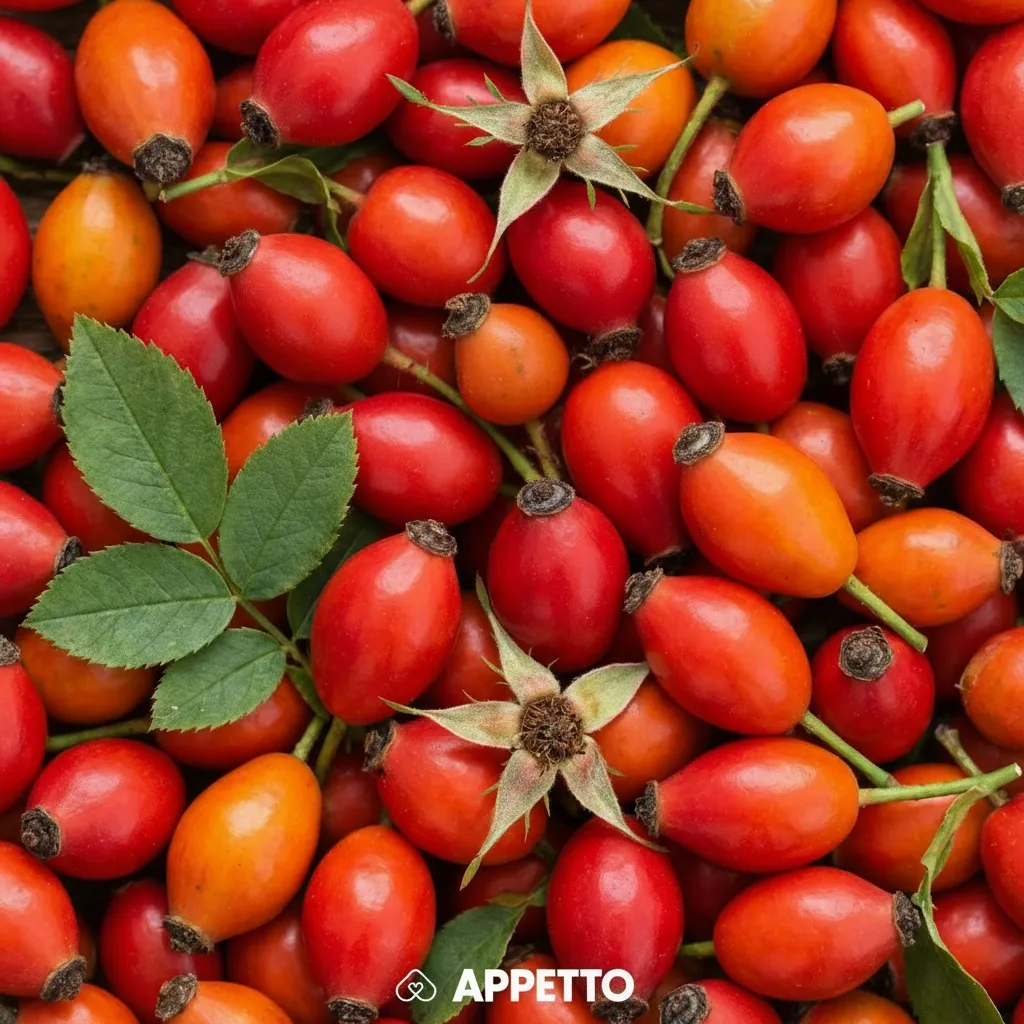
Dogs may have rosehip in moderation, but only as carefully filtered pulp, sifted powder or purée with the inner hairs and achenes completely removed. Whole rosehips can irritate the mouth, digestive tract and anal area.
Quick verdict
- For dogs: allowed in controlled amounts.
- Suitable forms: filtered pulp or properly sifted powder.
- Avoid: whole fruit, inner hairs, achenes and sweetened products.
Why preparation is essential
Rosehips contain fine internal hairs that can be intensely irritating. Offering the fruit whole may result in mouth itching, excessive salivation, vomiting, diarrhoea or anal irritation.
Is rosehip toxic to dogs?
Properly prepared pulp is not considered toxic in small quantities. The main risks are irritation from the hairs, discomfort from the hard achenes and digestive upset from excessive amounts or acidity.
Potential benefits
Rosehip contains natural vitamin C, pectin and antioxidant compounds. Dogs already produce vitamin C themselves, so supplementation is not automatically necessary and should not replace veterinary care.
- Pectin and dietary fibre.
- Antioxidant plant compounds.
- Natural vitamin C, although dogs generally synthesise their own.
How much can a dog have?
The correct amount depends on the product and its concentration. Follow the manufacturer’s instructions or ask your veterinarian before starting a supplement course.
- Small dog: a measured micro-dose.
- Medium dog: a small product-specific dose.
- Large dog: a moderate measured dose, not an improvised long-term course.
Whole fruit, powder or purée?
Whole rosehips should be avoided. Finely sifted powder, filtered pulp or purée completely free of hairs and achenes are the only reasonable forms. Jam and sweetened syrup are unsuitable.
How to prepare rosehip safely
- Never offer the whole fruit.
- Remove all achenes and internal hairs, or use a reputable sifted product.
- Measure the amount carefully.
- Stop if irritation or digestive symptoms appear.
When should it be avoided?
- In puppies unless a veterinarian recommends it.
- In dogs with gastritis, diarrhoea or digestive sensitivity.
- In dogs with skin allergies or recurrent irritation.
- In dogs receiving medication or following a prescription diet.
My dog ate a whole rosehip: what should I do?
Watch for mouth irritation, drooling, vomiting, diarrhoea and anal itching. Contact a veterinarian if signs are marked, painful or persistent.
Warning signs
Look for oral or anal itching, excessive salivation, vomiting, diarrhoea, abdominal discomfort, restlessness or repeated licking.
Safer alternatives
- A suitable dog treat.
- A few plain blueberries.
- A supplement recommended by your veterinarian when genuinely needed.
How APPETTO can help
APPETTO helps you distinguish between everyday foods and supplements requiring strict preparation, while comparing dog products through the Pet-Score®. Download APPETTO.
FAQ
Is rosehip toxic to dogs?
Properly filtered pulp is not considered toxic in small quantities, but the inner hairs are highly irritating.
How much rosehip can I give my dog?
Use the dose stated on an appropriate product or obtain veterinary advice, especially for repeated use.
Can dogs eat whole rosehips?
No. The inner hairs and achenes must be completely removed.
Can dogs have rosehip powder?
Potentially, provided it is finely sifted, suitable for animals and measured accurately.
Can puppies have rosehip?
It is better to avoid it unless a veterinarian specifically recommends it.
Rosehip may be used for dogs in a carefully prepared, accurately measured form, but whole fruit is unsuitable.
Credits and disclaimer
Credits: Content developed by the APPETTO team using referenced sources and its internal food-classification methodology.
Disclaimer: This information is general and does not replace veterinary advice.