


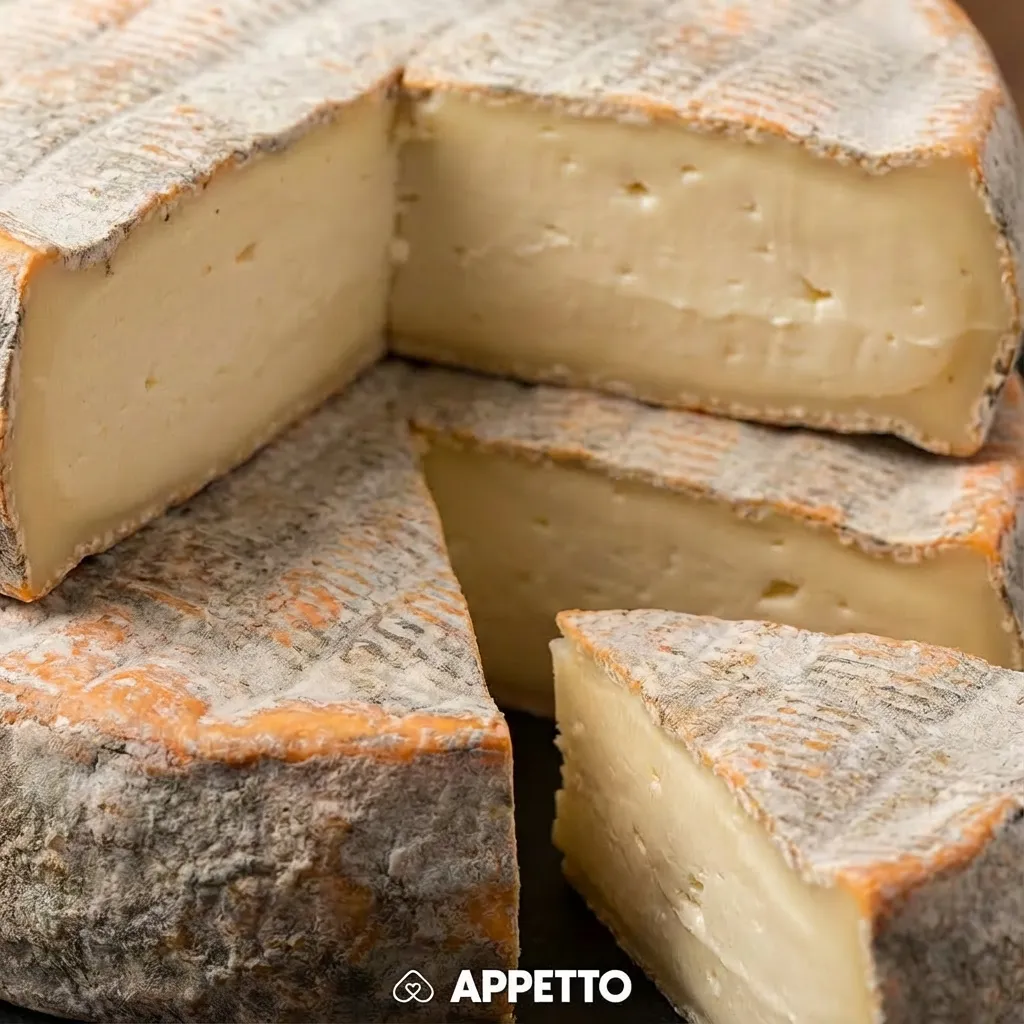
Saint-Nectaire should be avoided for cats. Even if an accidental tiny crumb won’t necessarily cause an emergency, this cheese remains fatty, salty, and often poorly tolerated due to its lactose content. The salty or moldy rind is even less suitable. In short, your cat can admire the cheese board from a distance—that’s already generous enough.
Quick verdict
- For cats: to be avoided.
- Key takeaways: lactose, fats, salt, and the rind make this cheese unsuitable for cats.
Saint-Nectaire for cats: allowed, to be limited, or forbidden?
Saint-Nectaire is not recommended for cats. Adult cats often have trouble digesting lactose, and this cheese adds an unnecessary load of fats and salt that has no place in a complete feline diet.
Is Saint-Nectaire dangerous or toxic for cats?
Saint-Nectaire is not strictly toxic if a micro-crumb is eaten, but it can be dangerous in large quantities or for a fragile cat. The most expected issues are vomiting, diarrhea, and abdominal pain.
What are the possible benefits?
The potential benefits do not justify offering it to your cat.
- A small amount of protein and calcium, but in an unsuitable form.
- No real nutritional value for a cat fed a complete, balanced diet.
What are the risks to know?
Saint-Nectaire can be poorly tolerated even in small quantities.
- Lactose: vomiting, diarrhea, abdominal pain.
- Fats and salt: weight gain, increased thirst, unnecessary kidney strain.
- Parts to avoid: salty or moldy rind, highly matured cheese, and dishes cooked with Saint-Nectaire.
How much can you give your cat?
No amount is recommended. It is best to avoid Saint-Nectaire altogether.
- Adult cat: avoid.
- Sensitive cat: strictly avoid.
- Kitten: entirely avoid.
Can my cat eat raw, melted, or cooked Saint-Nectaire?
No. Plain, melted, in a gratin, or mixed into a recipe, Saint-Nectaire is always advised against. Cheese dishes often include added salt, cream, butter, garlic, onions, or other harmful ingredients.
How to prepare it correctly?
- Do not give Saint-Nectaire to your cat.
- Keep the rind and any leftovers out of reach.
- In case of ingestion, note the amount eaten and monitor for any digestive signs.
When should it be avoided?
- Kittens.
- Senior cats.
- Adult cats that are lactose intolerant, obese, have kidney issues, or are prone to digestive sensitivity.
- Cats on specific medication or veterinary diets.
My cat ate Saint-Nectaire: what should I do?
If your cat only ate a tiny crumb, just keep an eye on them. If a large amount was eaten, if the rind was swallowed, or if vomiting, diarrhea, or pain occurs, contact your vet immediately.
What signs should you watch out for?
Vomiting, diarrhea, abdominal pain, lethargy, unusual thirst, loss of appetite, or any abnormal behavior should alert you.
What are some safer alternatives?
- A suitable feline treat.
- A small piece of plain, cooked chicken.
- A complete wet food tailored to their profile.
How can APPETTO help you?
APPETTO helps you identify foods to avoid for your cat and compare products easily using the Pet-Score®. This allows you to make clearer choices for their food bowl. Download APPETTO.
FAQ
Is Saint-Nectaire toxic to my cat?
No, not strictly like a poison, but it can cause significant digestive distress.
How much Saint-Nectaire can I give my cat?
No amount is recommended. It is best to avoid it completely.
Can my cat eat the rind of Saint-Nectaire?
No, the salty or moldy rind must be avoided.
Can my cat eat melted Saint-Nectaire?
No, cheese-based dishes are often too fatty, salty, and seasoned for cats.
What signs should I monitor if my cat ate Saint-Nectaire?
Watch out for vomiting, diarrhea, abdominal pain, fatigue, and loss of appetite.
Can a kitten eat Saint-Nectaire?
No, kittens should avoid cheese and stick to a diet specifically formulated for their growth.
In conclusion, Saint-Nectaire should be avoided for cats: lactose, fats, salt, and the rind make it an unfavorable food. To better compare suitable products, APPETTO is here to help with the Pet-Score®. Download APPETTO.
Credits and disclaimer
Credits: Content created by the APPETTO team based on referenced sources and our internal food classification methodology.
Disclaimer: This information is general and does not replace professional veterinary advice.