


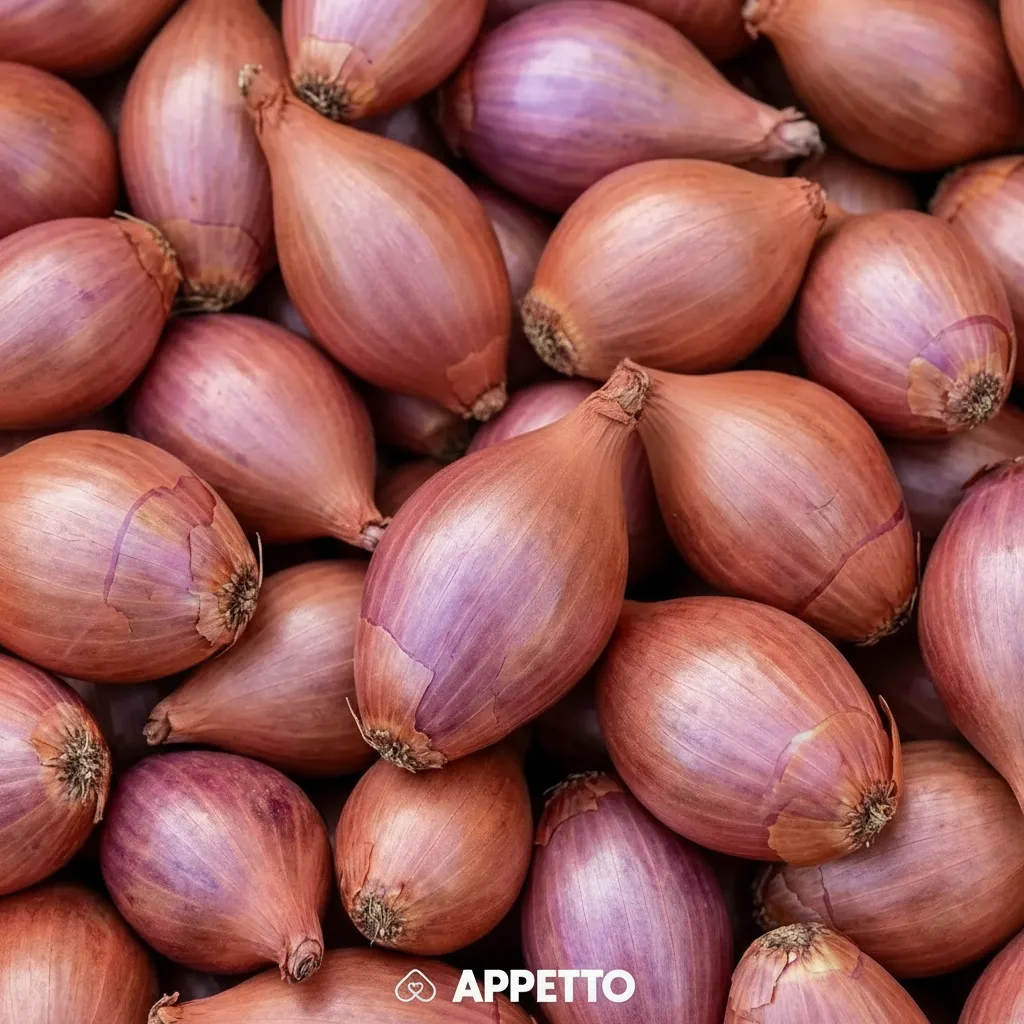
Shallots are strictly forbidden for dogs. Like garlic and onions, they contain sulfur compounds that can damage red blood cells and cause hemolytic anemia. Whether raw, cooked, or powdered, they remain dangerous.
Quick Verdict
- For dogs: strictly forbidden.
- Remember: no shallots, in any form, even in small quantities.
Shallots and dogs: why are they forbidden?
Shallots belong to the allium family. Their thiosulfates can oxidize red blood cells, form Heinz bodies, and lead to the destruction of erythrocytes. It is not just a matter of being hard to digest; it represents a real risk to your dog’s blood.
Are shallots poisonous to dogs?
Yes. Shallots are poisonous to dogs. Cooking does not eliminate the danger. Leftovers from dishes, sauces, broths, or stuffings containing shallots should also be completely avoided.
What are the possible benefits?
There is no benefit that justifies giving them to a dog.
- No recommended serving size.
- No safe form.
Risks to be aware of
- Thiosulfates: oxidation of red blood cells.
- Hemolytic anemia: weakness, pale mucous membranes, fatigue.
- Digestive problems: vomiting and diarrhea.
- Bulb and leaves: both to be completely avoided.
How much shallot should you give your dog?
None. Shallots should not be given to dogs under any circumstances.
- Small dog: zero.
- Medium dog: zero.
- Large dog: zero.
Raw, cooked, powdered, or in a dish: is the danger the same?
Yes. Shallots remain toxic whether they are raw, cooked, dried, powdered, or mixed into a dish. Sauces and table scraps are particularly dangerous.
How to avoid an accident?
- Never give your dog leftovers containing shallots.
- Check the ingredients of sauces, broths, stuffings, and stews.
- If ingested, contact a veterinarian.
When is the risk higher?
- For a puppy.
- For a dog that is already anemic.
- For a small dog.
- If the dog has eaten an unknown amount.
- If the dog is showing weakness or pale mucous membranes.
My dog ate shallots: what should I do?
Call a veterinarian or an animal poison control center immediately. Signs of anemia can appear with a delay, so do not wait until your dog seems visibly sick.
What signs should you look out for?
Vomiting, diarrhea, weakness, pale mucous membranes, rapid breathing, tachycardia, lethargy, or dark urine should all be a cause for concern.
What are some safer alternatives?
- Plain cooked carrot.
- Cooked zucchini.
- Cooked green beans.
How can APPETTO help you?
APPETTO helps you identify forbidden foods like alliums, compare dog products using the Pet-Score®, and make your dog’s food bowl safer. Download APPETTO.
FAQ
Is a shallot poisonous to a dog?
Yes, shallots are toxic to dogs.
How much shallot is dangerous for a dog?
No amount is recommended. The risk depends on the dog’s weight, the dose ingested, and individual sensitivity.
Can my dog eat cooked shallots?
No, cooking does not eliminate the toxicity.
Are shallot leaves dangerous?
Yes, both the bulb and the leaves should be avoided.
What signs should I watch for after ingestion?
Vomiting, weakness, pale mucous membranes, and tachycardia.
Can a puppy eat shallots?
No, it is strictly forbidden.
Shallots are a food that should be completely avoided by dogs. To better identify food hazards and compare suitable products, APPETTO helps you with the Pet-Score®. Download APPETTO.
Credits and Disclaimer
Credits: Content developed by the APPETTO team using referenced sources and the internal food classification methodology.
Disclaimer: This information is general and does not replace veterinary advice.