


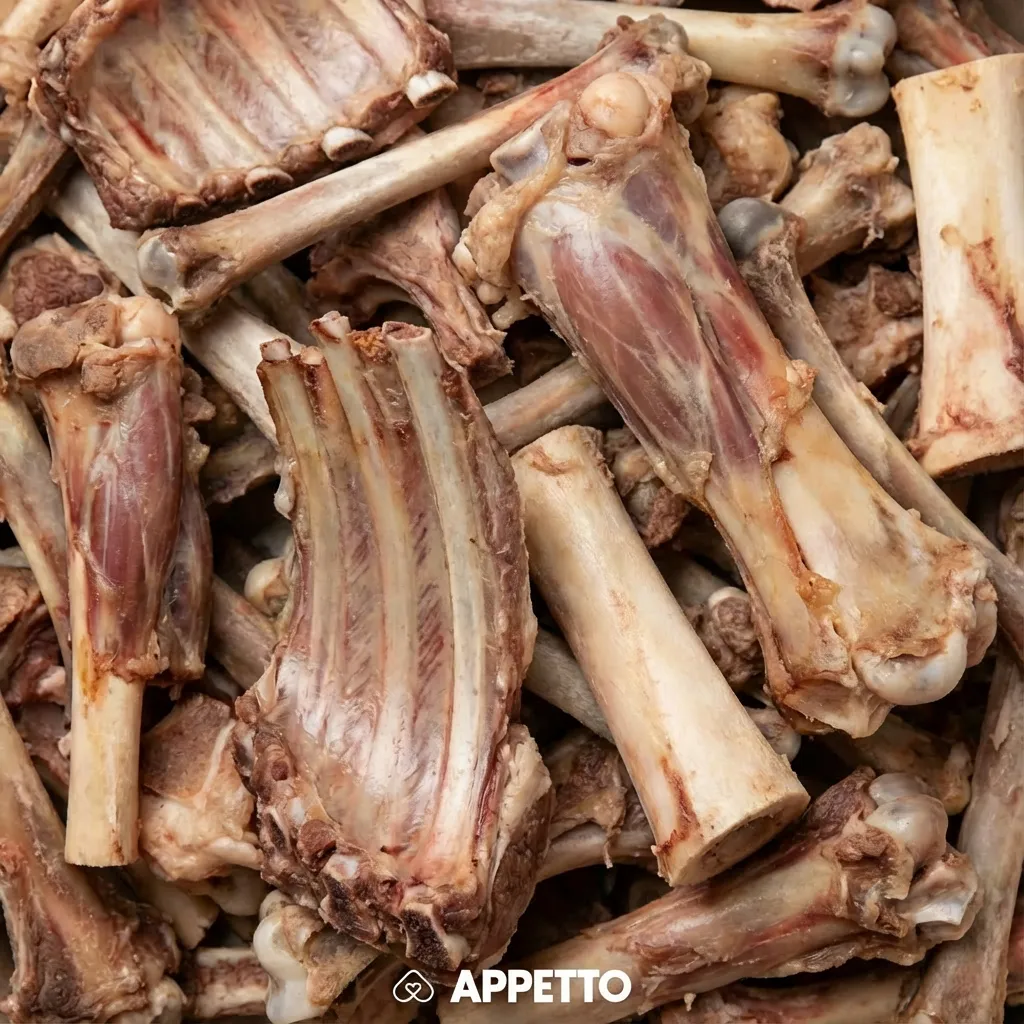
Sheep bones should be avoided for dogs. They are considered brittle and can cause sharp splinters, choking, blockages, digestive perforation, or blood in the stool.
Quick Verdict
- For dogs: best avoided.
- Key takeaway: sheep bones, especially cooked bones, are not recommended.
Sheep bones and dogs: why is the risk too high?
The main danger is mechanical. A fragment can get stuck or injure the digestive tract. Cooked bones are even more brittle.
What are the possible benefits?
The chewing benefits do not outweigh the risks.
- Can keep the dog occupied.
- But there is a high risk of splintering.
Risks to know
- Sharp splinters: possible perforation.
- Blockage: choking or bowel obstruction.
- Cooked bones: breaking is more dangerous (can dogs eat cooked bones? definitely not).
How much to give?
No deliberate quantity is recommended.
Raw or cooked?
Cooked bones must be strictly avoided. Sheep bones in general remain unadvisable.
How to avoid accidents?
- Remove all bones from the meat.
- Do not give bone-in leftovers.
- Use suitable chewing alternatives.
Dogs at risk
- Small breeds.
- Greedy eaters.
- Puppies.
- Brachycephalic dogs.
- Dogs with fragile teeth.
My dog swallowed a bone: what should I do?
Monitor for choking, pain, vomiting, constipation, or blood in the stool. Contact a vet if any of these signs appear.
How APPETTO can help you
APPETTO helps you identify mechanical risks and compare safer products for dogs using the Pet-Score®. Download APPETTO.
FAQ
Can dogs have bones from sheep?
It is better to avoid them.
Are cooked sheep bones dangerous?
Yes, they can shatter into sharp splinters.
What signs should I watch for?
Choking, pain, or blood in the stool.
Can a small dog eat them?
No, exercise maximum caution.
What alternative should I choose?
A suitable chew toy.
Do bones clean teeth?
The risk does not justify this use here.
Sheep bones are too risky for dogs. To compare suitable alternatives, APPETTO helps you with the Pet-Score®. Download APPETTO.
Credits and Disclaimer
Credits: Content developed by the APPETTO team based on referenced sources and our internal food classification methodology.
Disclaimer: This information is general and does not replace veterinary advice.