


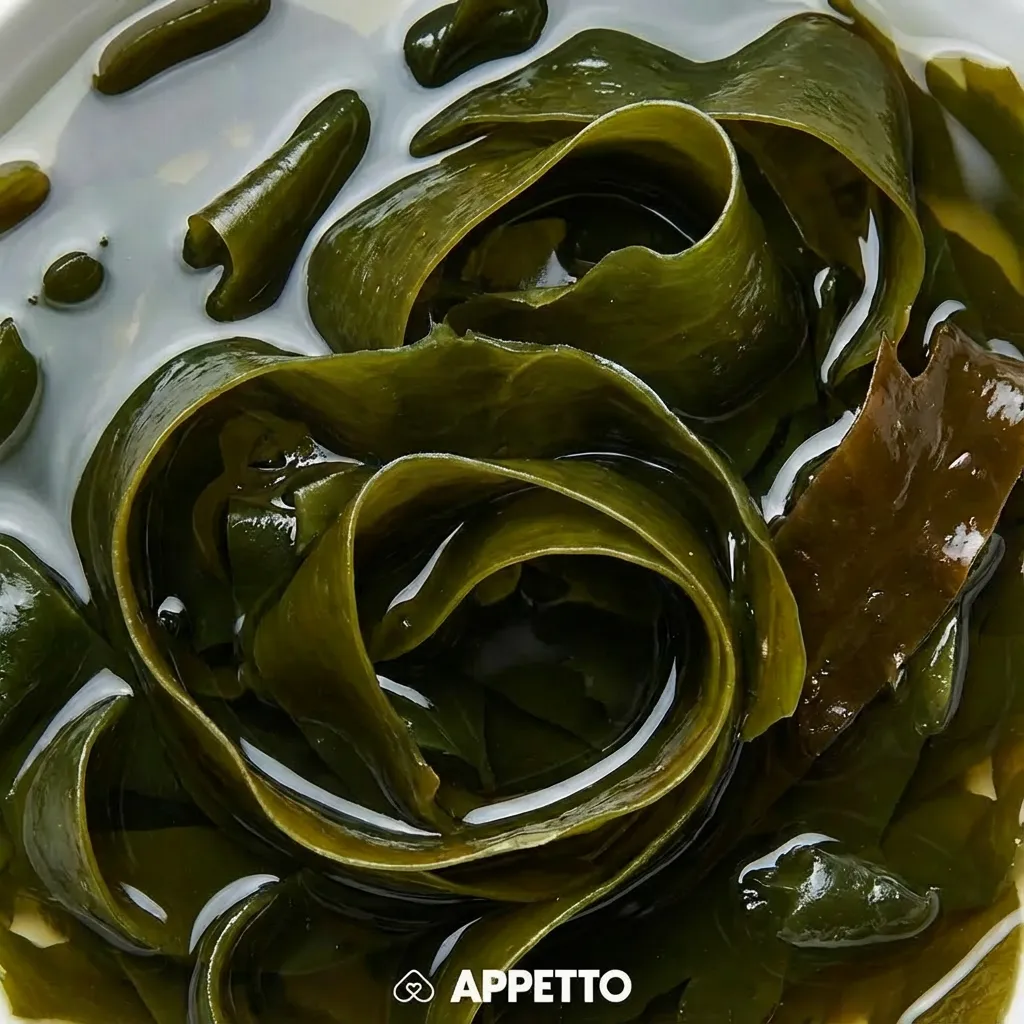
When considering wakame for dogs, moderation is essential. This seaweed provides minerals, iodine, and fiber, but excess iodine can disrupt the thyroid. Dry or overly large strips should always be avoided.
Quick verdict
- For dogs: Allowed in moderation.
- To remember: Serve only as a rehydrated micro-portion, plain, and very finely chopped.
Wakame for dogs: A marine supplement or an iodine risk?
Wakame can offer occasional interest, but it is not a food to give randomly. Its richness in iodine requires real caution, especially in dogs with existing thyroid disorders.
Is wakame dangerous for dogs?
In a controlled micro-portion, wakame is generally tolerated. The danger mainly comes from excess consumption, natural salt, dry strips swallowed without chewing, and repeated iodine intake over time.
Possible benefits of wakame
- Provides minerals.
- Source of fiber.
- Very low calorie intake.
- Contains iodine, which is useful in very small doses but risky in excess.
Risks to consider
- High iodine content: Can cause disruption of T3 and T4 thyroid hormones.
- Natural salt: Risk of overload if portions are excessive.
- Dry strips: Possible irritation or obstruction if swallowed as is.
How much wakame can you give your dog?
- Small dog: One rehydrated micro-flake.
- Medium dog: A small chopped pinch.
- Large dog: A moderate pinch, given very occasionally.
Dry, rehydrated, or seasoned wakame?
Wakame must always be rehydrated, rinsed, and chopped before serving. Avoid seasoned seaweed salads, soy sauce, added salt, sugar, vinegar, or spices.
How to prepare it correctly?
- Rehydrate a tiny amount in water.
- Rinse thoroughly to remove excess salt.
- Chop very finely before serving to your dog.
When should it be avoided?
- Hypothyroid dogs.
- Hyperthyroid dogs.
- Small breeds sensitive to overdoses.
- Dogs currently on thyroid treatment.
- Dogs on a strict veterinary diet.
My dog ate wakame: what to do?
If your dog ate a plain micro-portion, simple monitoring is sufficient. In case of a large quantity, dry strips, or seasoned salad ingestion, monitor for vomiting, diarrhea, and digestive discomfort.
What signs should alert you?
Vomiting, diarrhea, lethargy, agitation, loss of appetite, or unusual thyroid signs should be closely monitored.
Simpler alternatives?
- Targeted veterinary supplements if needed.
- A suitable complete food.
- Zucchini or cucumber for a light, safe extra.
How can APPETTO help you?
APPETTO helps you better understand functional ingredients like seaweed, compare dog products using the Pet-Score®, and choose with caution. Download APPETTO.
FAQ
Is wakame toxic to my dog?
No, not in a controlled micro-portion, but excess iodine presents a real risk.
How much wakame to give my dog?
A micro-flake to a pinch depending on size, given very occasionally.
Can my dog eat dry wakame?
No, it must be rehydrated and chopped to avoid any risk of obstruction.
Is wakame good for a dog’s thyroid?
Not without veterinary advice, as extra iodine can also unbalance the thyroid.
What signs should I watch for after ingestion?
Vomiting, diarrhea, and lethargy.
Can a hypothyroid dog eat wakame?
It is better to avoid it without prior veterinary advice.
Wakame can be given to dogs in a micro-portion, but its iodine content requires caution. To compare suitable foods and products, APPETTO helps you with the Pet-Score®. Download APPETTO.
Credits and warning
Credits: Content developed by the APPETTO team based on referenced sources and internal food classification methodology.
Warning: This information is general and does not replace veterinary advice.