


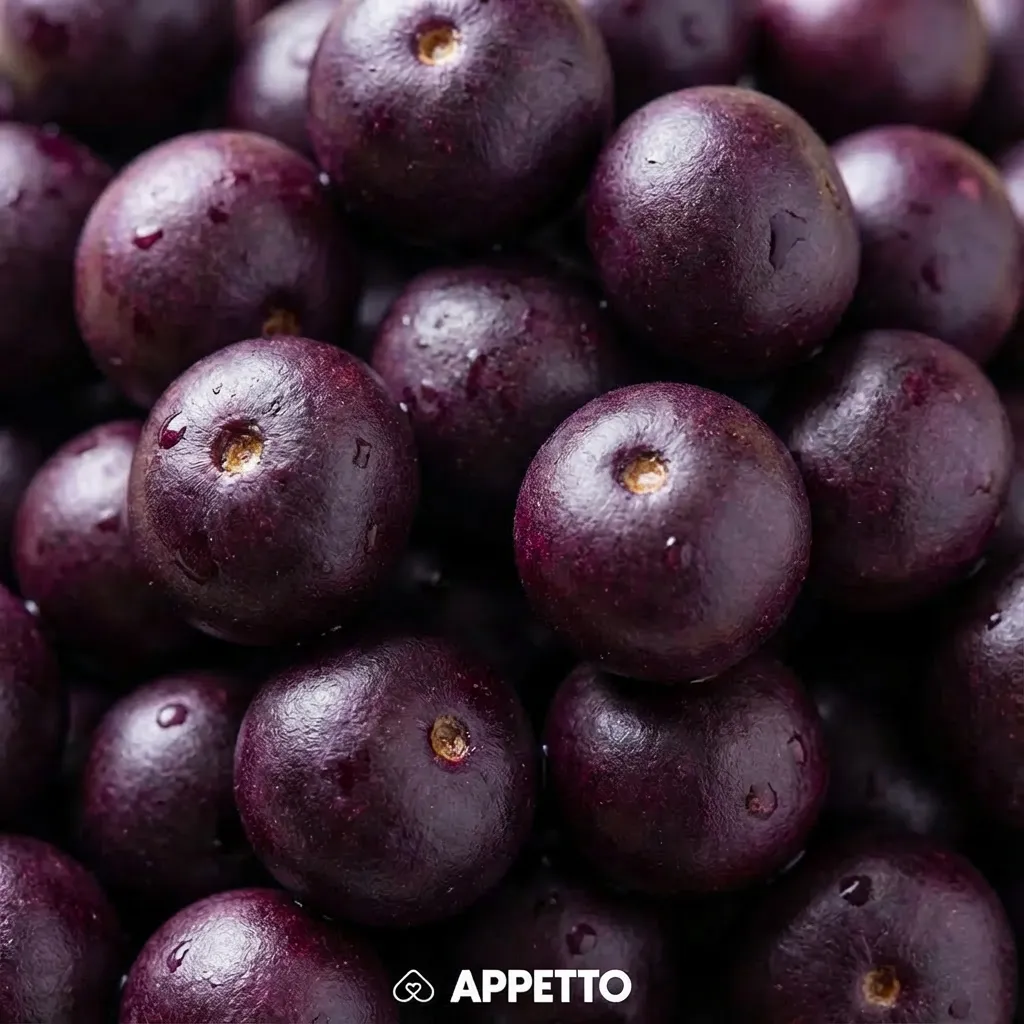
Açaí is best avoided for dogs. Reliable dog-specific safety data is limited, and many açaí products contain sugar, chocolate, cocoa, caffeine, sweeteners, or other ingredients that may be harmful.
Quick verdict
- For dogs: do not offer açaí intentionally.
- Key point: after accidental ingestion, check the amount, the type of product, and the full ingredient list.
Can dogs eat açaí?
Açaí is not a necessary or recommended addition to a dog’s diet. Although it is promoted as an antioxidant-rich food for people, dogs do not need it, and the lack of clear safety data makes avoidance the simplest option.
Is açaí dangerous or toxic to dogs?
There is not enough reliable evidence to confirm that plain açaí pulp is safe for dogs. The greatest practical concern often comes from commercial açaí products containing chocolate, cocoa, caffeine, xylitol, other sweeteners, added sugar, or high-fat ingredients.
Are there any benefits?
Açaí contains plant antioxidants, but that does not automatically make it suitable for dogs. Any potential benefit is unnecessary when a dog already eats a complete, balanced diet.
- Contains antioxidants, but they are not essential from this particular fruit.
- No proven benefit justifies routine feeding.
What are the risks?
The main concern is the uncertainty surrounding plain açaí and the unsuitable ingredients commonly found in açaí products.
- Digestive upset from unfamiliar, concentrated, or sweetened products.
- Powders and supplements may deliver highly concentrated ingredients.
- Avoid bowls, juices, sorbets, desserts, and products containing chocolate, cocoa, caffeine, xylitol, other sweeteners, or dairy.
How much açaí can a dog have?
No amount is recommended. If your dog licked a trace of plain açaí, monitor them without panicking. Contact a veterinarian if a larger amount, a concentrated product, or a product with potentially harmful ingredients was eaten.
- Small dog: avoid completely.
- Medium dog: do not offer intentionally.
- Large dog: do not offer intentionally.
Can dogs eat raw, powdered, or processed açaí?
Plain açaí is best avoided because safety information is limited. Açaí powder is concentrated and should not be used without veterinary guidance. Juices, bowls, sorbets, supplements, and desserts are even less appropriate because they may contain sugar, chocolate, caffeine, sweeteners, flavorings, or high-fat ingredients.
What to do after accidental ingestion
- Identify whether your dog ate fruit pulp, powder, purée, juice, a bowl, or a dessert.
- Check the ingredient list for chocolate, cocoa, caffeine, xylitol, other sweeteners, and high-fat ingredients.
- Estimate the amount eaten and contact a veterinarian if the serving was significant or symptoms appear.
When is extra caution needed?
- Puppies and small dogs.
- Senior dogs and dogs with sensitive digestion.
- Dogs with diabetes, heart disease, pancreatitis, or excess weight.
- Dogs taking medication or eating a prescribed veterinary diet.
My dog ate açaí: what should I do?
If your dog swallowed a trace of plain açaí, monitor them over the next several hours. Contact a veterinarian or veterinary poison control service promptly if your dog ate a large amount, concentrated powder, or a product containing chocolate, cocoa, caffeine, xylitol, or another sweetener.
Warning signs to watch for
Watch for vomiting, diarrhea, agitation, tremors, weakness, unusual tiredness, an abnormal heart rate, or behavior that is out of character. The likely risk depends heavily on the other ingredients involved.
Safer alternatives
- Seedless apple cut into small pieces.
- A few plain blueberries.
- A small amount of banana as an occasional treat.
How can APPETTO help?
When a food is marketed as healthy for people but raises questions for dogs, APPETTO helps you compare products and better understand what belongs in your dog’s bowl with Pet-Score®. Download APPETTO.
FAQ
Is açaí toxic to dogs?
There is not enough reliable evidence to confirm that plain açaí is safe for dogs, so it is best avoided.
How much açaí can I give my dog?
No amount is recommended because açaí has no necessary role in a dog’s diet.
Can dogs eat açaí powder?
No. The powder is concentrated and should not be used without veterinary guidance.
Can dogs eat açaí bowls?
No. Açaí bowls often contain sugar, chocolate, cocoa, caffeine, granola, dairy, or sweeteners.
What should I watch for if my dog ate açaí?
Watch for vomiting, diarrhea, agitation, tremors, weakness, unusual tiredness, or an abnormal heart rate.
Can puppies eat açaí?
No. Puppies are more sensitive and should not be given foods with limited safety information.
In short, açaí has no necessary place in a dog’s diet, and processed products can introduce additional risks. To compare foods more confidently with a clear A-to-E rating, Download APPETTO.
Credits and disclaimer
Credits: Content prepared by the APPETTO team using referenced sources and its internal food classification methodology.
Disclaimer: This information is general and does not replace veterinary advice.