


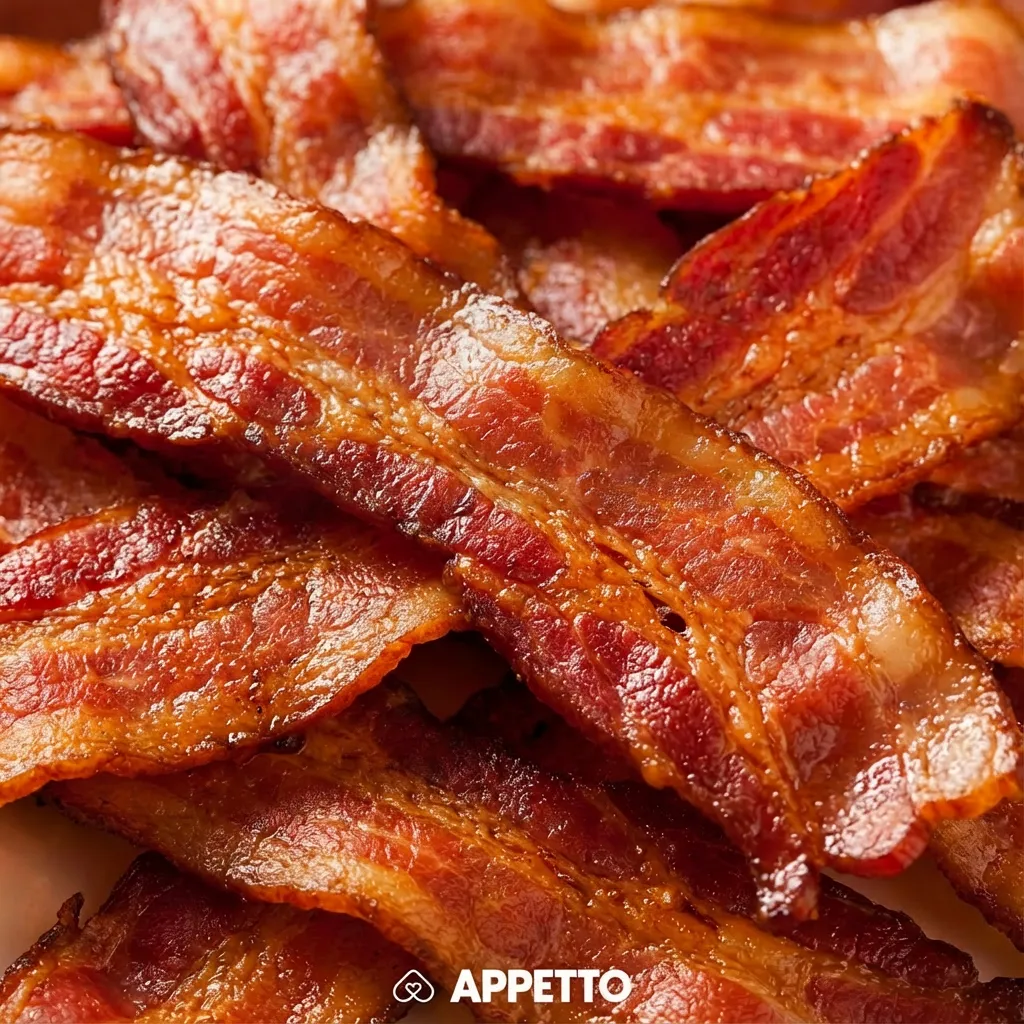
Pork bacon should be avoided for dogs. It is highly salted, very fatty, and can lead to digestive issues, dehydration, weight gain, or pancreatitis in sensitive dogs.
Quick verdict
- For dogs: best avoided.
- Key takeaway: even when cooked, bacon remains too fatty and too salty.
Bacon and dogs: why isn’t it a good treat?
Bacon smells amazing, so naturally, many dogs want a bite. However, its nutritional profile is terrible for them: it’s packed with salt, fat, and is highly processed. It isn’t just plain meat; it’s a cured pork product.
Is bacon dangerous for dogs?
It can be, especially in large amounts or for dogs with sensitive stomachs. The high fat content can overwork the pancreas, while the salt can increase thirst, cause water retention, and lead to imbalances.
Any potential benefits?
There are no nutritional benefits that justify feeding bacon to your dog.
- Highly processed product.
- Too fatty.
- Too salty.
Risks to be aware of
- Fats: potential acute pancreatitis.
- Salt: dehydration and hypertension.
- Calories: weight gain.
How much bacon can I give my dog?
It is best not to give them any at all.
- Small dogs: avoid completely.
- Medium dogs: avoid.
- Large dogs: avoid as well.
Raw, cooked, or trimmed bacon: is it safer?
Cooked bacon is still not recommended. Trimming off some of the fat doesn’t make it a suitable treat, because the high salt content and processing chemicals remain.
How to prevent accidents?
- Do not use bacon as a reward.
- Avoid giving them breakfast leftovers.
- Inform everyone in your household.
Which dogs are most at risk?
- Overweight dogs.
- Dogs with a history of pancreatitis.
- Dogs with heart conditions.
- Dogs with kidney issues.
- Senior dogs.
My dog ate bacon: what should I do?
If they only ate a crumb, just keep an eye on them. If they ate a large amount, or if you notice vomiting, diarrhea, or abdominal pain, contact a vet immediately.
What signs should I look out for?
Watch out for vomiting, diarrhea, abdominal pain, lethargy, excessive thirst, or a refusal to eat.
What are some safer alternatives?
- Cooked, skinless chicken.
- Lean turkey.
- Low-fat commercial dog treats.
How can APPETTO help?
APPETTO helps you spot products that are too fatty or salty, compare dog foods using the Pet-Score®, and avoid seemingly good treats that are actually unhealthy. Download APPETTO.
FAQ
Is bacon toxic to my dog?
It is mainly too fatty and salty, which is why it should be avoided.
Can my dog eat cooked bacon?
No, even when cooked, it is not recommended.
Can bacon cause pancreatitis?
Yes, especially in sensitive dogs.
My dog ate a tiny piece of bacon, is it serious?
A crumb just requires observation, but avoid giving any more.
What symptoms should I monitor after ingestion?
Vomiting, diarrhea, and abdominal pain.
Can an overweight dog eat bacon?
No, it should be strictly avoided.
Bacon is not suitable for dogs: it’s too salty, too fatty, and too risky. To compare treats and find safer food options, APPETTO helps you out with the Pet-Score®. Download APPETTO.
Credits and Disclaimer
Credits: Content created by the APPETTO team based on referenced sources and our internal food scoring methodology.
Disclaimer: This information is general in nature and does not replace professional veterinary advice.