


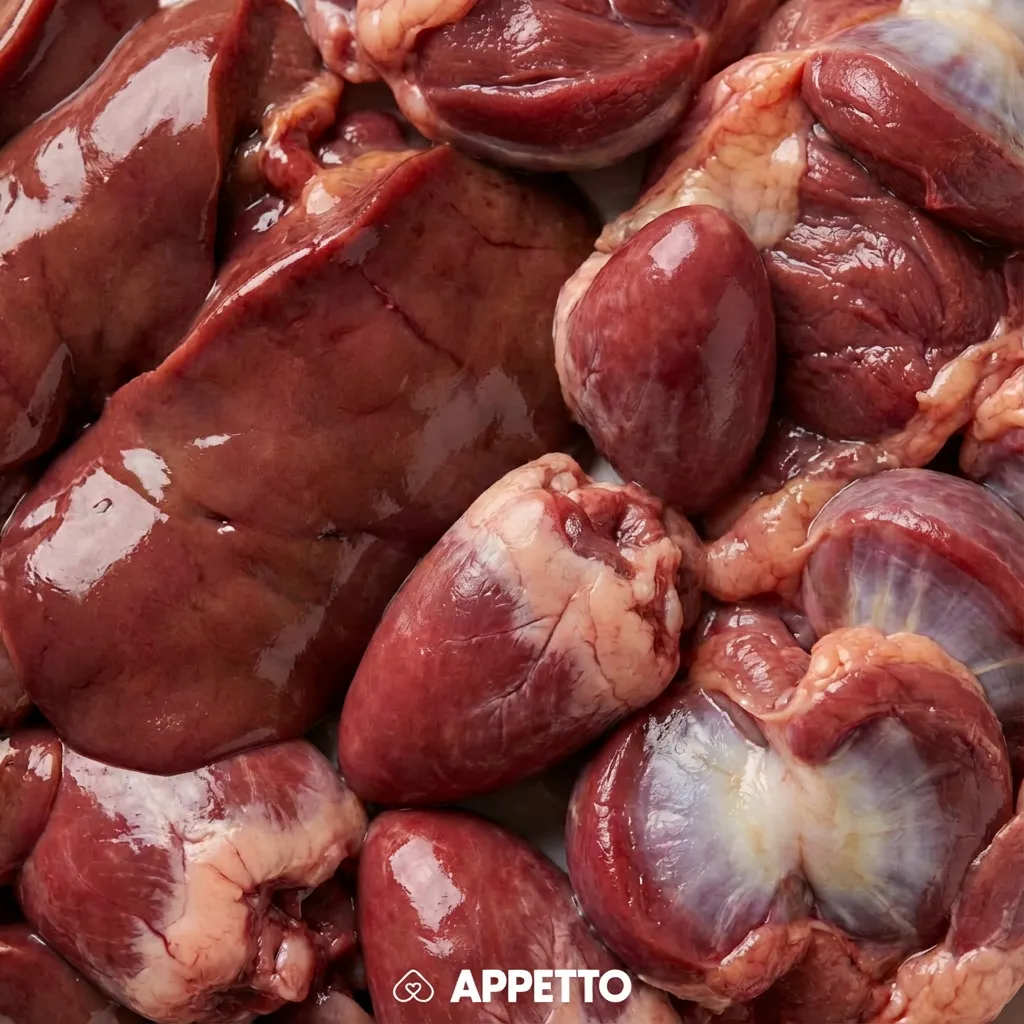
Guinea fowl offal can be given to cats in moderation. It is rich in iron, and certain muscle meats provide taurine, but liver should only be given occasionally.
Quick verdict
- For cats: allowed in moderation.
- Key takeaway: heart and gizzard in small pieces, liver strictly limited.
Guinea fowl offal and cats: beneficial but concentrated
Cats can benefit from the nutrients in offal, but a small amount is enough. Excess can cause vomiting, diarrhea, or a vitamin A imbalance.
What are the possible benefits?
- Iron.
- Taurine in certain muscle meats.
- Vitamins.
- High palatability.
Risks to consider
- Liver: cumulative vitamin A.
- Large pieces: choking hazard.
- Overconsumption: digestive upset.
How much should you give?
A very small portion is enough. Liver must remain rare and carefully measured.
Raw or cooked?
Small, finely chopped pieces can be offered. Cooking is safer if hygiene is not perfectly controlled.
How to prepare it?
- Choose fresh offal.
- Cut into very small pieces.
- Avoid salt, spices, garlic, and onions.
At-risk cats
- Overweight sterilized cats.
- Kittens.
- Seniors.
- Cats with sensitive digestion.
My cat ate too much: what should I do?
Monitor for vomiting and diarrhea. Contact a vet if symptoms persist or if a large amount of liver was consumed.
How can APPETTO help?
APPETTO helps you compare offal, understand nutrient-dense ingredients, and evaluate cat products using the Pet-Score®. Download APPETTO.
FAQ
Is guinea fowl offal good for cats?
Yes, in small quantities.
Is guinea fowl liver allowed?
Yes, but only occasionally.
Does guinea fowl heart provide taurine?
It can contribute to their taurine intake.
Should it be cooked?
It is safer if you have any doubts about food safety.
What signs should I watch for?
Vomiting or diarrhea.
Can a sterilized cat eat it?
Yes, but in a limited portion.
Guinea fowl offal can be suitable for cats, but only in small portions. To compare feline foods, APPETTO helps you with the Pet-Score®. Download APPETTO.
Credits and disclaimer
Credits: Content created by the APPETTO team based on referenced sources and our internal food classification methodology.
Disclaimer: This information is general and does not replace veterinary advice.