


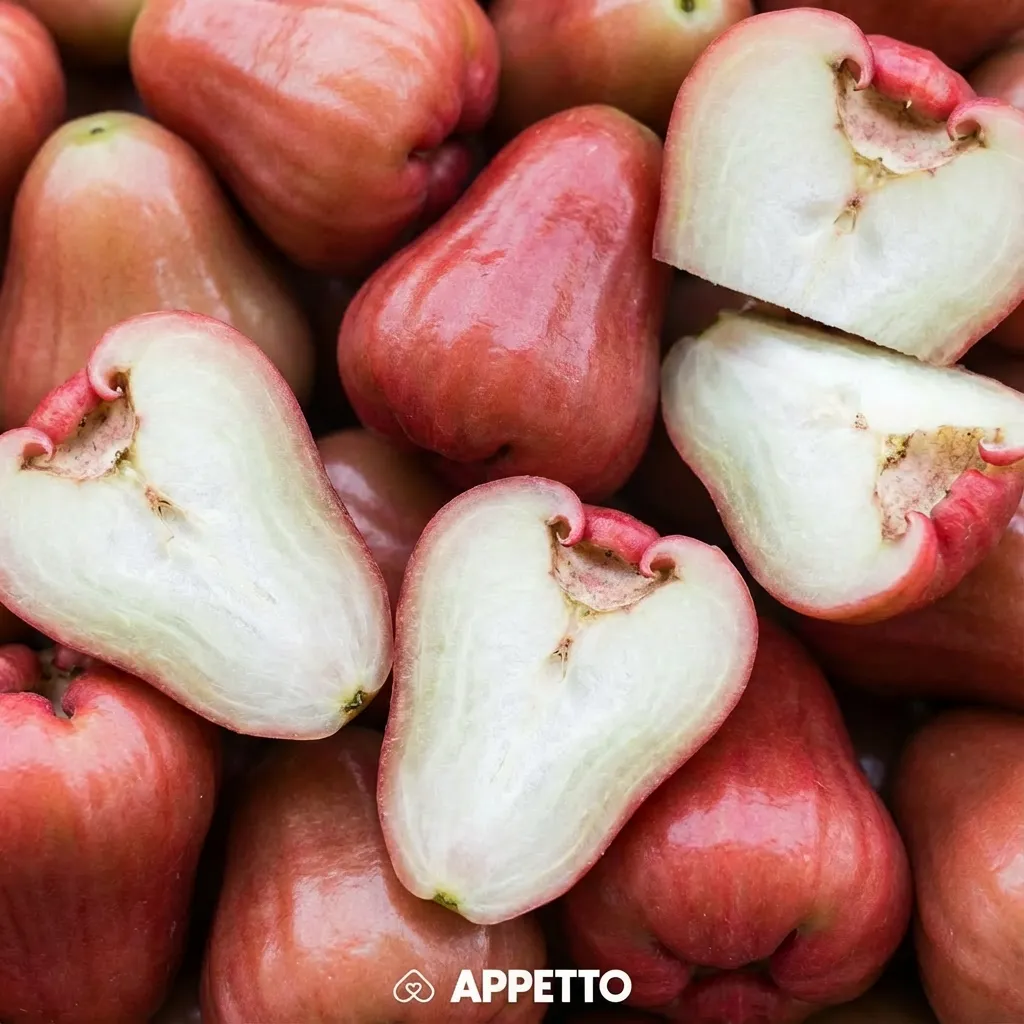
Reliable canine safety data for jamalac, also called Malay apple, is limited. A tiny amount of ripe flesh may be less concerning than the hard seed or plant parts, but intentional feeding is not recommended until clearer evidence is available.
Quick verdict
- For dogs: insufficient evidence; avoid intentionally.
- Main concerns: seed, leaves, stems, skin and uncertain tolerance.
- After ingestion: seek veterinary advice if a seed or plant material was swallowed.
Is jamalac toxic to dogs?
There is not enough reliable evidence to classify ripe flesh as clearly toxic. However, the seed and plant parts are poorly studied and may pose mechanical or chemical risks.
Why the seed is concerning
The hard central seed may cause choking, mouth injury or intestinal obstruction, especially in small dogs or dogs that swallow food whole.
Possible benefits
The fruit may contain water and plant nutrients, but these modest benefits do not justify using a poorly documented food as a treat.
- No established canine benefit.
- No reliable serving recommendation.
Possible risks
- Vomiting or diarrhoea.
- Excessive salivation or abdominal discomfort.
- Choking or obstruction from the seed.
- Unknown effects from leaves, stems or roots.
How much jamalac can a dog eat?
No routine serving is recommended. Avoid intentional feeding.
Raw fruit, juice or processed jamalac?
Avoid whole fruit, seeds, juice, sweetened preparations and all plant parts.
What to do after ingestion
- Remove the remaining fruit and plant material.
- Check whether the seed, leaves or stems were swallowed.
- Monitor your dog closely.
- Contact a veterinarian if a seed or plant material was involved, or if symptoms develop.
Dogs requiring extra caution
- Puppies and small dogs.
- Dogs that swallow food whole.
- Senior or frail dogs.
- Dogs receiving medication or following a prescription diet.
Warning signs
Watch for vomiting, diarrhoea, lethargy, weakness, salivation, abdominal pain, repeated retching or breathing difficulty.
Safer alternatives
- A small piece of seedless apple.
- A few plain blueberries.
- A dog treat formulated for canine nutrition.
How APPETTO can help
APPETTO helps you approach poorly documented fruits cautiously, compare dog products and understand potential risks using the Pet-Score®. Download APPETTO.
FAQ
Is jamalac toxic to dogs?
Reliable safety data is limited, so intentional feeding is not recommended.
How much jamalac can I give my dog?
No serving is recommended.
Can dogs eat jamalac seeds?
No. The hard seed may cause choking or intestinal obstruction.
Can dogs drink jamalac juice?
No. Juice is unnecessary and may contain added sugar.
Can puppies eat jamalac?
No. It is safer to avoid it.
Jamalac remains insufficiently studied in dogs, and its hard seed and plant parts create avoidable risks.
Credits and disclaimer
Credits: Content developed by the APPETTO team using referenced sources and its internal food-classification methodology.
Disclaimer: This information is general and does not replace veterinary advice.