


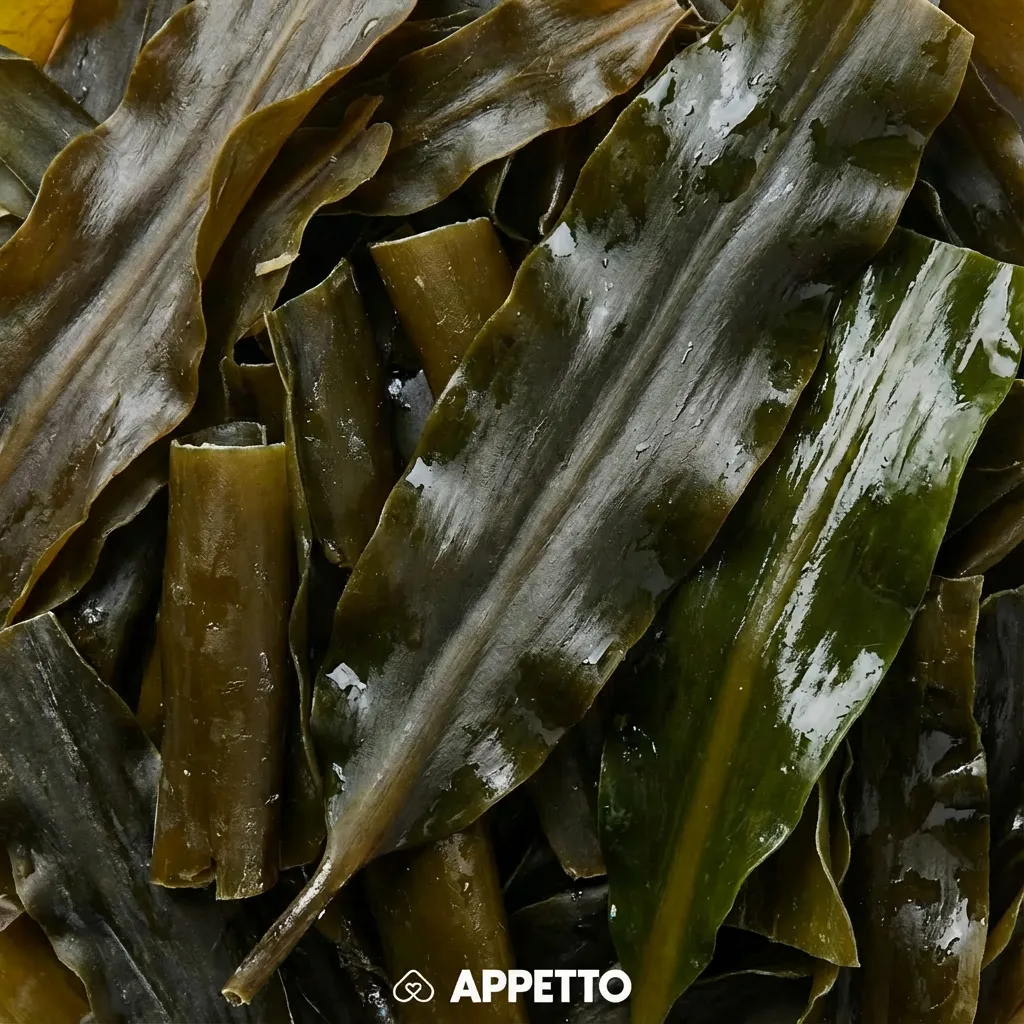
Konbu, or kombu seaweed, should be avoided for cats. Its very concentrated iodine content can disrupt the thyroid, especially in older or hyperthyroid cats. Its nutritional value does not justify this risk.
Quick verdict
- For cats: avoid.
- To remember: no dry strips, powder, or konbu broth in the bowl.
Konbu and cats: why does caution prevail?
Cats are particularly prone to thyroid disorders, especially as they age. Adding a seaweed very rich in iodine without veterinary supervision is therefore not a good idea.
Is konbu dangerous for cats?
It can present a risk if the iodine intake becomes too high. The main concern is a thyroid imbalance, alongside possible digestive issues. Additionally, dry strips can irritate the digestive tract.
What are the possible benefits?
The potential benefits are very limited and do not outweigh the risks.
- Theoretical mineral intake.
- However, the iodine dosage remains difficult to control.
The risks to know
- Concentrated iodine: possible thyroid disruption.
- Unbalanced intake: unnecessary for a cat’s diet.
- Dry strips: possible digestive irritation or vomiting.
How much konbu to give your cat?
No voluntary amount is recommended. Konbu should simply be avoided.
- Adult cat: avoid.
- Sensitive cat: avoid.
- Kitten: avoid.
Dry, rehydrated, powdered konbu or broth: what to choose?
None of these forms is recommended. Whether dry, rehydrated, powdered, or served in broth, konbu can provide too much iodine, and sometimes added salt or seasonings.
How to avoid an accident?
- Do not give konbu as a homemade supplement.
- Avoid sharing soups and broths containing kombu.
- Always seek veterinary advice before introducing any iodine supplement.
When should it be absolutely avoided?
- Senior cat.
- Hyperthyroid cat.
- Cat with a suspected thyroid disorder.
- Cat on specific treatments.
- Cat on a veterinary diet.
My cat ate konbu: what to do?
If your cat ate a trace, monitor their behavior. In case of a large amount, repeated intake, vomiting, diarrhea, or a history of thyroid issues, contact your veterinarian.
What signs should alert you?
Vomiting, diarrhea, lethargy, agitation, weight loss, an unusual appetite, or the worsening of a thyroid disorder should alert you.
What are more suitable alternatives?
- Balanced complete wet food.
- Appropriate feline treats.
- Veterinary diets in case of a thyroid disorder.
How can APPETTO help you?
APPETTO helps you better understand foods to avoid for cats, compare products using the Pet-Score®, and make safer choices for their bowl. Download APPETTO.
FAQ
Is konbu toxic to my cat?
It is to be avoided mainly because of its very high iodine content, which can disrupt thyroid function.
How much konbu can I give my cat?
No voluntary amount is recommended.
Can my cat eat dry konbu?
No, dry strips should be avoided as they can also cause digestive irritation.
Can my cat drink konbu broth?
It is not recommended, especially if the broth is salty or seasoned.
What signs to watch for?
Vomiting, diarrhea, lethargy, or any signs of worsening thyroid disorders.
Can a hyperthyroid cat eat konbu?
No, it must be avoided, and professional veterinary advice should be followed.
Konbu should be avoided for cats, especially due to its concentrated iodine levels. To easily compare feline foods and products with a clear benchmark, APPETTO helps you navigate with the Pet-Score®. Download APPETTO.
Credits and warning
Credits: Content developed by the APPETTO team based on referenced sources and internal food classification methodology.
Warning: This information is general and does not replace veterinary advice.