


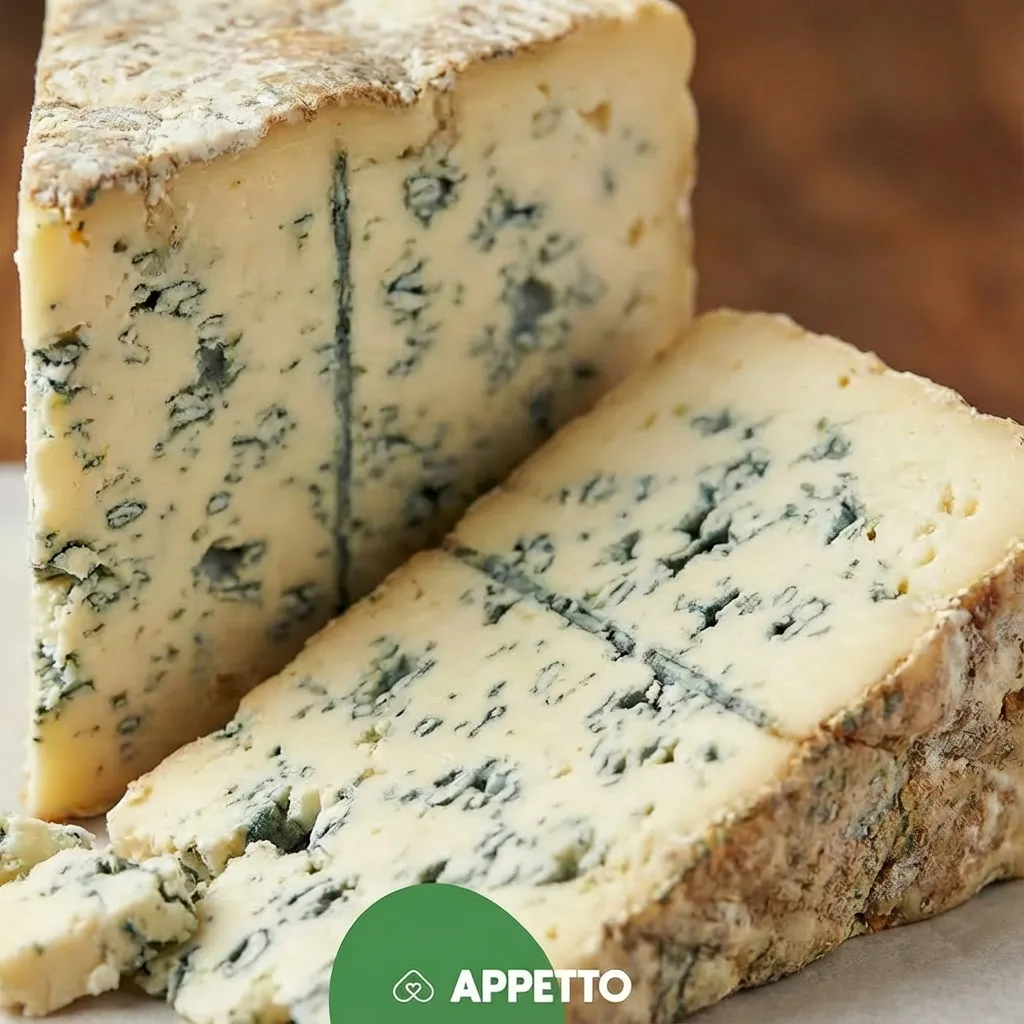
Stilton is strictly forbidden for dogs. Like other blue cheeses, it can contain roquefortine C, a toxin linked to mold, capable of causing neurological and digestive issues. It’s not just a cheese that is “a bit too rich”: it is a cheese to avoid entirely. Dogs can survive without tasting this British luxury, we promise.
Quick verdict
- For dogs: strictly forbidden.
- Key takeaways: risk of vomiting, tremors, seizures, and a veterinary emergency.
Stilton for dogs: allowed, to be limited, or forbidden?
Stilton should never be given to dogs. The entire cheese must be avoided, including the internal mold, crumbs, sauces, tarts, pizzas, toasts, or dishes cooked with Stilton.
Is Stilton dangerous or toxic to dogs?
Yes, Stilton can be toxic to dogs. Roquefortine C can cause agitation, tremors, seizures, and neurological issues. The fats and salt in the cheese can also cause vomiting, diarrhea, and discomfort.
What are the possible benefits?
There are no benefits that justify giving Stilton to a dog.
- Protein and calcium never outweigh the toxic risk.
- Dog-appropriate treats are much safer.
What are the risks to know?
The primary risk is neurological.
- Roquefortine C: seizures, tremors, agitation.
- Fats and salt: caloric overload, vomiting, diarrhea.
- Parts to avoid: the whole cheese, internal mold, sauces, and Stilton dishes.
How much can you give your dog?
No amount is safe to recommend. Stilton is forbidden.
- Small dogs: faster risk; call a vet in case of ingestion.
- Medium dogs: do not give; seek advice if ingested.
- Large dogs: do not give either.
Can my dog eat Stilton raw, cooked, or in a sauce?
No. Raw, cooked, melted, or in a sauce, Stilton remains dangerous. Cooking does not eliminate the underlying issue associated with blue cheeses.
How to react properly?
- Remove the cheese or dish in question immediately.
- Note the time, the quantity, and your dog’s weight.
- Contact a vet, especially if your dog is small, frail, or symptomatic.
When should it be avoided?
- Puppies.
- Senior dogs.
- Epileptic dogs, or those with neurological fragility or digestive sensitivity.
- Dogs on medication, sick, or on a veterinary diet.
My dog ate Stilton: what should I do?
Contact a vet to find out the next steps. Do not induce vomiting without professional advice. If your dog exhibits vomiting, tremors, agitation, or seizures, you must act quickly.
What signs should you watch out for?
Vomiting, tremors, seizures, agitation, diarrhea, balance issues, fatigue, or hypersensitivity should warrant immediate attention.
What are safer alternatives?
- A dog treat without blue cheese.
- A small piece of plain cooked chicken.
- A dog-specific reward, low in salt.
How can APPETTO help you?
APPETTO helps you identify strictly forbidden foods and compare dog products using the Pet-Score®. You can thus make clearer choices and avoid real pitfalls. Download APPETTO.
FAQ
Is Stilton toxic to my dog?
Yes, it can be toxic because of the roquefortine C present in blue cheeses.
How much Stilton is dangerous for a dog?
There is no safe amount. The risk depends on the weight, quantity, and sensitivity of the dog.
Can my dog eat Stilton sauce?
No, it contains blue cheese and often a lot of salt or fat.
Can my dog eat cooked Stilton?
No, cooking does not make this cheese safe.
What signs should I monitor if my dog ate Stilton?
Watch out for vomiting, tremors, seizures, agitation, diarrhea, and balance issues.
Can a puppy eat Stilton?
No, never. In case of ingestion, contact a vet.
Stilton is strictly forbidden for dogs due to the neurological risk associated with blue cheeses. To better identify dangerous foods and compare suitable products, APPETTO helps you with the Pet-Score®. Download APPETTO.
Credits and warning
Credits: Content developed by the APPETTO team based on referenced sources and our internal food classification methodology.
Warning: This information is general and does not replace veterinary advice.